A hacked Roomba that (while it’s performing its duties) indexes your stuff.
From Sweden etc, where Logh come from, who are one of my best bands.
I think that possibly the… killer-component of this thing is the software/sensor combo. Because let’s face it, most of your stuff doesn’t actually live on the floor – it’s up on top of things. So you’ll probably want a little helicopter, or your own CCTV system – or even just the ability to use your iphone to photograph a room when you want it indexed.
Now like most people, I find design concepts extremely annoying – but not as annoying as those vacuum cleaners that are basically the same shape as brooms rather than the elephant-nosed type… so you wind up having to heft the entire lump of machinery around every time you want to do the corners etc. Basically someone has thought. “It’s a thing that sweeps the floor like a broom, so we should make it look like a broom”.
This is deeply retrogressive and stick-in-the-mud thinking. It’s a bit like back in the Web 1.0 days where entrepreneurial types were always trying to get me to build “shopping mall” websites that looked like an actual shopping mall, where you could wander about and look at shops etc. This is where “Virtual Reality” went wrong back in the day – a term popularised by Jaron Lanier, who has just written a book in which he doesn’t know what he’s talking about.
Things don’t need to look like the things they’re replacing – and they might even work a lot better if they don’t.
If I needed a replacement arm, I wouldn’t really want one of those tan-plastic ones that looks like it’s sculpted out of wax – I’d like something like the thing above, but with a dremel attachment and rocket launchers. Laser beams. A TV remote. A metal detector. A thing for squeezing oranges. A fishing rod. An MP3 player. Some sort of plugin thing so you could make weird attachments of your own. Lego maybe. Simply having a hand that could rotate at 30,000 RPM would be pretty impressive though.
Something that would make people think… not “Oooh, he’s got an arm missing. Mustn’t mention the arm” or even “Oooh… that’s cool”, but “Jesus, that’s so much better than my arm, that I’m never going to catch up, and I now realise that I’m a doomed species, permanently stuck in the past etc”.
It’s something I can never get enough of. People complaining on and on until the end of time that we were promised flying cars, and there aren’t any.
Well there are. There are hundreds of them and they’ve been around since the 40s,
But they’ve never really taken off… and why is that I hear you ask? Who’s fault is it?
It’s yours. You.
And by “You”, I mean everyone in the entire human race, except me… because you’re constantly crashing the cars that only operate in two dimensions, you can’t possibly be trusted to operate the ones that operate in 3. It would be mayhem. Carnage.
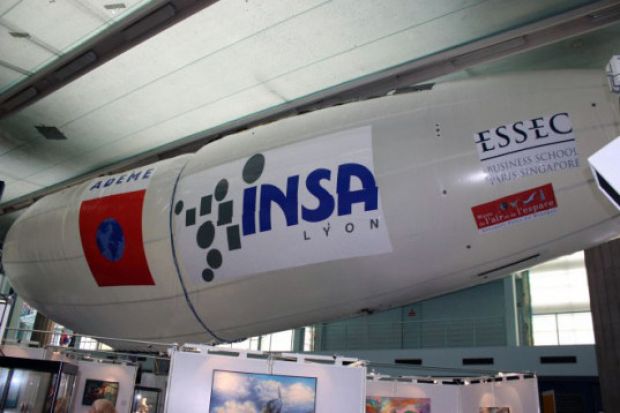
And that’s why blimps are the answer – they’re basically like giant flying airbags, and so long as they’re not filled with hydrogen and the passenger bit is right in the middle, I think you’ll be fine.
The one in the photo at the top is solar – about to fly across the English (or French) Channel… I think I’d go one step further and make them like giant Zorbs – but filled with Helium – so you float, and your voice goes squeaky, and with a touch of nitrous oxide, so you think it’s incredibly funny that your voice has gone squeaky. You could just barge about the place talking in a squeaky voice and pissing yourself with laughter, crashing into things – only doing superficial damage to everything. It would be great.
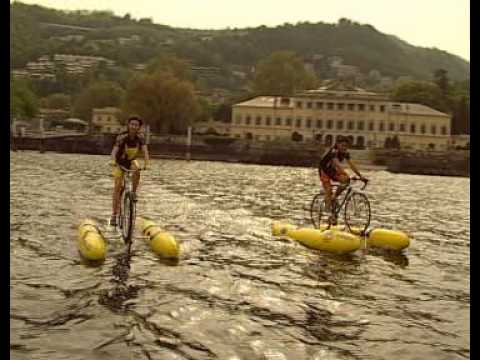
Anything inflatable is automatically great. This one’s also quite cool because you can use the bike to pump up the pontoon things. The propeller doesn’t look terribly… optimised though.
I wonder if instead of having a bike, you could use a rowing-machine. Nah. That would be silly.
“littleBits is an opensource library of discrete electronic components pre-assembled in tiny circuit boards. Just as Legos allow you to create complex structures with very little engineering knowledge, littleBits are simple, intuitive, space-sensitive blocks that make prototyping with sophisticated electronics a matter of snapping small magnets together. With a growing number of available modules, littleBits aims to move electronics from late stages of the design process to its earliest ones, and from the hands of experts, to those of artists, makers and designers.”
I’ve spent ages wracking my brains trying to figure out how to plug components together without soldering or breadboards… Magnets! – and the polarity is set up so you can’t get the wires round the wrong way.
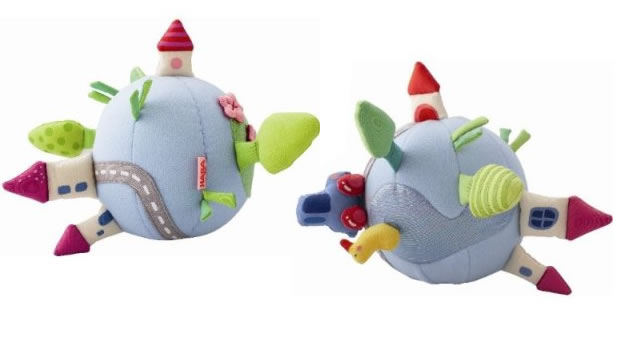
Ok, they’re not edible – unless you’re a goat or a baby, which is apparently who they’re designed for. Babies I mean. Kids.
If they were designed for people who might not try to eat them, you could make them even better by making the planet bit out of furry velcro stuff and the trees and cars and whatnot having prickly velcro bits on their bases. Then people could make their own things to stick onto them. Maybe. Alternatively you could have a metal-cored ball and neo-magnets.
Or a lego one. You could play spherical chess. The world’s your oyster, face it. Go forth and multiply and stop wasting my time. I’m busy. Call me back when you need a flood or a plague or something.
The first one being called snail-eye, which is what I’m on about in this posting…
Basically what I want (kindof) is a tiny 360 degree lens on a stick. Something that you can use to take a 360 degree shot of absolutely everything in your immediate environment…. work out the dimensions/perspective etc in software. I don’t think snails eyes do this… but they look as though they should, so that’s kindof the inspiration.
There are a bunch of companies doing parabolic mirrors eg: www.0-360.com
But they ain’t quite there yet I don’t think. I think I’ve seen one that can do this with a lens as well, but what I have in mind is something really really small. LED-sized or smaller.
There would be loads of uses for these – from keyhole-surgery to remote-tourism… if you could make them small enough (and that is kindof the point) you could sprinkle a whole load of them connected to inter-communicating rfid chips (or something) and someone wearing 3d glasses could be given a simulation of walking between them. Maybe.
I wish I was back in Prague. That’s all.
This was at least partly inspired by the news that…
A miniature telescope implanted into the eye could soon help people with vision loss from end-stage macular degeneration. Last week, an advisory panel for the Food and Drug Administration unanimously recommended that the agency approve the implant. Clinical trials of the device, which is about the size of a pencil eraser, suggest it can improve vision by about three and a half lines on an eye chart.
The wind-up radio guy won all sorts of prizes (if memory serves) for bringing the possibility of radio etc to people who don’t have access to electricity – and to be fair, I’m a lot more interested in innovation for people at the bottom than people who like to think of themselves as being at the top…
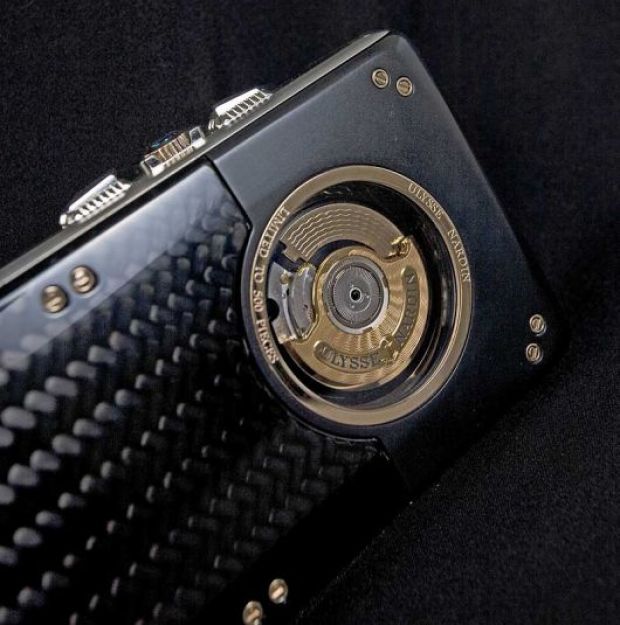
… so it is with a certain wry disdain that I present to you…. The Self-Winding Cellphone, from the posh-blog “Born Rich” which is every inch an expose of the poverty of design-ideas being thrown at the wealthy. It reminds me of the crashingly tasteless Brady-Bunch era craft-fad of sticking seashells to ashtrays – except this time round you stick Swarovski crystals to things, and flog them to oligarchs… or more accurately, fill magazines with them and flog them to people addicted to envy. I mean really… don’t you people feel… “owned”?
Still…
A self-winding phone is an excellent idea. Not for people who are rich but for people who are poor.
When I was a kid I used to live on this island that had hermit crabs… that were little miracles of design… when they withdrew into their shells, their legs would neatly interlock to seal the shell and present a flat surface to the outside world.
So anyway, now there is a shortage of shells for wild hermit crabs… apparently around 30% of crabs are living in shells that are too small. I find this incredibly sad for some reason… something from my past I guess.
Elizabeth Demray has created artificial shells using rapid-prototyping and built to ideal strength-to-weight ratios. They are non-biodegradable so won’t break, and can be passed from crab to crab over the generations.
That’s the good news. The possibly NSG news is that they’re based on Fascist Italian architecture which crabs may or may not actually like, and she talks about getting corporate sponsorship, so they have advertising on them.
At which point (in my most humble of opinions) they go from being art, to rubbish, albeit rubbish that is useful to crabs.
We’d have to make a hell of a lot of them of course. But we already make a hell of a lot of little plastic things that we chuck in the sea,
so maybe we could combine the two. Bottletops that sink, that crabs can live in.
I can’t help but feel we’re getting all of this the wrong way round, and maybe the answer to the lack of shells isn’t plastic alternatives, but more shellfish. Not that the crabs would mind of course, because the plastic ones (If I’ve got this right) are actually better than the calcium ones… and humans provide for better or worse, a huge number of other niche’s so why not this as well? A beach filled with plastic shells, plastic sand, the bluest of blue skys.
I shall ask Michelle from Naturally Crabby (which I went on about before, and is a great site I think… and is exactly what the internet is for) what she thinks.
update: Well what she said was that the houses don’t curl around enough… so crabs won’t be able to grip properly, and that they’ll probably pose the same hazard to other wildlife the plastic bottle caps do – and that’s not inconsiderable.
So there you go. We ain’t there yet. The curly thing is a technical issue… the hazard to wildlife one? Not so simple. There’s got to be some easy technical fix to that as well though I would have thought. I mean swallowing normal shells isn’t a hazard to wildlife… surely artificial shells can be equally as hazard-free.