GENOMICONrss

rss

The Crowd-Sourcing of Intelligent-Design

Favela Chic

Is it because I is White?

Forget about Favela Chic, try some Favela Punk.

Both appalling and riveting, as any good punk should be – this lot appear to have become quite famous… largely to do with an infamous dick-swinging bit in another video. A whole lot more here.

Die Antwoord

Cos for all your beautifully designed… “stuff”, and for all your earnest, striving, well-meaning, TED-headed (standing ovation-earning) world-savingness… the future doesn’t belong to you, or even people like you. The only vitality that “Chic” has is from money… and if you don’t have that, where do you go? You sit around in your bubble of refined niceness, group-thinking contentedly away with other bubbles – and then one day you wake up to find that the world outside has gone on without you, and a new generation has arrived.

Anyway, this video/act could have come from anywhere – if I didn’t know it was Afrikaans I would have said somewhere in the Wild East of Europe… where the wave of the property boom finally broke (and rolled back), beyond it an eternity of Soviet Era housing blocks with fucked pipes and playgrounds with weeds growing through the concrete.

Reminds me of this thing that came courtesy of one Brian Limmond a while back.

As the devil once said, “what gives me the edge, is that they never see me coming”.

Or maybe they do. We’ve had Favela Punk in Scotland forever.

Look on my works ye Mighty, and despair

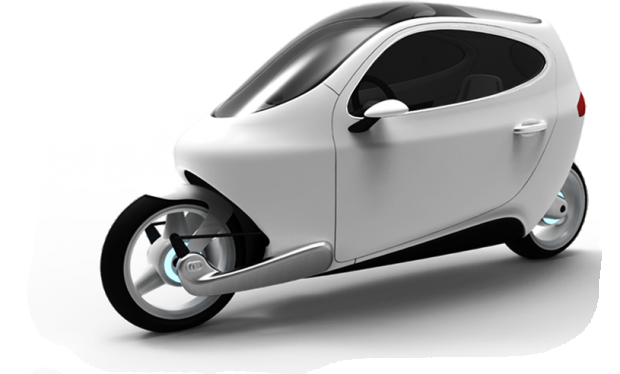
The Bamboo Aptera

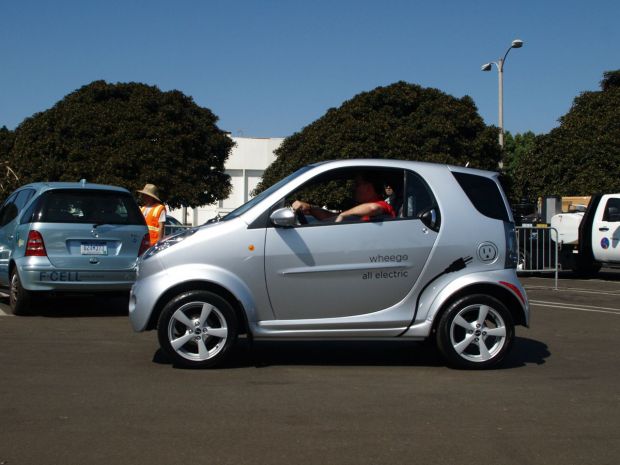
Is the Wheego Whip the “Cadillac of neighborhood electric vehicles? enthuses the headline at Wired.

altcar1

No, because it looks like a fucking teapot.

Leaving aside the general principle, “If a headline ends with a question-mark, the answer is always ‘No’”, it’s kindof an irrelevant question anyway. It’s about as relevant as asking “Is the Model-T the Brewster of Cars”.

No… because the (demographic) market for carriages was rendered irrelevant by the market for cars… and the same thing will apply (I suspect) in turn, for the horseless-carriages we now know and love.

It isn’t about Western consumers. Western consumers are irrelevant… it’s about the massively growing middle class of countries like India, China and possibly various parts of South America. If you’re still designing vehicles for people who can afford $40,000 then you belong to the past.

As an aside, when I was looking for names of famous carriage-makers, I came across this:

studebaker1

Studebaker, who started out making carriages, actually made an electric car slightly over 100 years ago… and while it is a bit teapotty, it isn’t that much more teapotty than the timid offerings that are turning up today.

So. Main-stream car-designers have lost it. Do any of them even drive?

Here are a couple of fundamental truths that they all seem to miss with a studious vengeance:

1) Cars don’t (just) solve a transport problem, they solve a privacy problem.

2) Cars also solve an identity problem – generally where sex meets territoriality.

A car is a piece of territory… and (similarly to the way single people in the west all now sleep in double beds) it is a piece of territory that says “I am big and strong enough to share with a mate”. To sleep in a single bed is infantalising… to drive in a one-seater car? People aren’t going to do it… and that is why the new offering from VW probably isn’t going to catch on:

vw1

Not just because it looks like a death-trap which has considerately been designed to double as a coffin, but because your imaginary girlfriend will have to sit behind you (carrying a pot on her head). They hate that. I know.

Go stand at the side of a motorway… preferably one of those ones where there’s a special lane for people who have more than one person in the car… how many of those cars look like teapots? How many cars aren’t using the fast lane because there is only one person in the car?

Think that’s an accident?

It’s not… it’s a deliberate behaviour. Being in the car is the only time an awful lot of people get to be themselves… get to be on their own. They can sing, they can talk to themselves… and so on. Go sit on a London tube in the commute-time (assuming you can sit, which you can’t). What’s the worst thing about being there? It’s being too close to too many other people… and it’s etched into the lines of every single face you see.

So anyway… this is how I see this going. This:

Crossed with this:

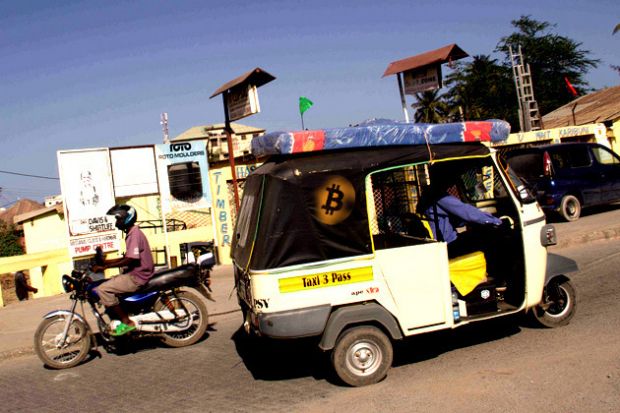
rickshaw1

ie: favela-chic meets 21st Century design, with echos of the 1920s… but with a radically different business-model because Americans are no longer the market.

Something that says “Sex”. Something that says “21st Century”.

It needs to be

1) Car as Platform. It’s not a finished product, it’s a set of techniques, materials, designs, philosophies that people can adapt to local conditions, using local materials. For this to happen…

2) The individual subsystems need to be de-coupled. It needs to be electric-capable. Pedal-capable. “burning stuff” capable. Increased efficiency means the ability to eliminate entire subsystems… and the ability to do so without rebuilding every single part of the machine is crucial

3) Detachable brain. ie: Your iPhone is the dashboard.

Or your netbook, or whatever. The point is to create a possibility for turning as many problems as possible into software problems… because we’re pretty good at software, and the barriers to entry are very low.

4) It will probably need to be a 3 wheeler to get around laws that favour big corporations.

5) Easily sourceable, swappable parts. I’m talking bicycle wheels. Crap is better. The line of fastest propagation… a bit like the reprap approach – minimum vitamin parts.

And so on.

See also The Maker’s Bill of Rights

bor1

There have been some tantalizingly close passes at this… nearly. Almost. We’re gradually inching towards it, but no one that I’m aware of has approached this with anything like direct-intent. Here are a bunch of random examples etc.

C,mm,n

cmmn

Pros: Open-Source
Cons: Looks like a teapot. Lacks phonetic-transparency so you’re going to spend the rest of your life spelling it to people

ManGo

mango

Australian Student variant.

Pros: Complete elimination of various subsystems, eg: gears, brakes, axels
Cons: looks like a teapot. Also bigger than the doors of the building that it was built inside. Engineering students as well. Bless. I imagine they’ll probably teach that in the second year.

Dutch Recumbent bicycle with electric assist variant.

aerorider

Pros: Looks pretty cool. Made of bike parts. Electric capable, pedalable
Cons: Single-seater so there’s no room for your imaginary girlfriend, Big invisible sign saying “EAT ME” to trucks etc.

Closer though. The company website has all the hallmarks of a company that’s like, died though. Notices saying “coming soon” from last year don’t bode well.

So there you go. I’ve got to cut this short now because someone’s shouting at me… there are various other examples in varying states of repair. I’m going on about Bamboo Apteras again though, because it’s getting quite close to Lottery Winning Day etc… so I think I’ll take the proceeds of that, and put it into this.. Someone’s got to.

Zambikes, Zambulances

This is cool

From Zambikes via Afrigadget,

In fact, I think it’s more than cool… I think it’s the future, of a kind.

If web-designers designed cars…

…and we do know a bit about design do we web-designers. We live in a vicariously-Darwinian, fast-breeder hot-house. Evolution is really sped up in the crucible of the market. We share. We recombine. We move on.

Video-recorder controls aren’t designed by web-designers; iPhone interfaces are – and it’s not to say that the real genius of design isn’t happening somewhere else, or that we’re not still cocking it up a lot but… there are sets of principles that we design to, like:

1) separate style from content/function

2) manual-free simplicity

3) de-couple systems so different parts can be swapped in an out easily

4) design for resilience, flexibility, robustness, speed, scalability, under-the-hood clarity

5) platforms rather than control-systems

etc etc.

Traditional product design doesn’t do these – in fact it often does the opposite, and profits from doing the opposite – creating fake scarcities, and micro-monopolies. There is (for example) a special part of hell where designers of laptops are strangled forever with the non-standardised power cables. Every 5 years (or whatever it is) the average Westerner spends about a year’s worth of wages buying a ton of steel and glass, that is used to carry around a single person… who doesn’t (in spite of their best efforts to the contrary) weigh a ton.

But that’s shite, it’s dying and it deserves to. The symbol (and often reality) of 20th century freedom and independence has turned into a millstone, and it belongs in a museum (and in a genre of K-for-cool movies like Two Lane Blacktop and Vanishing Point) That spirit is gone. A car is now a series of monthly payments.

So anyway, if web-designers designed cars, the chassis, engine, body, control-systems, electronics etc etc would all be discrete and swappable sub-systems. You could reskin your car, rather than having to buy a new one every 5 years… only you probably WOULD buy a new one every 5 years anyway, because as I say, we operate in a fast-breeder evolutionary hot-house. We don’t do what the car-industry does – which is produce basically the same car, but with minor (diminishing-return-on-R&D) enhancements… since the 70s.

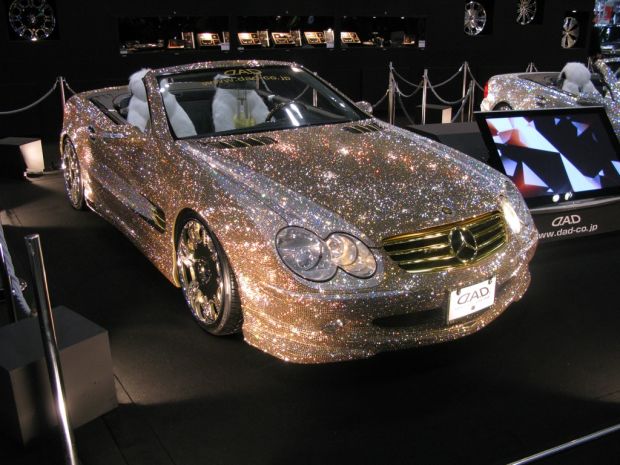
I mean take a look at this:

crystalcar

Now that, My Learned Colleagues, is a poster-child for an industry that has run out of ideas. The preposterousness of monument-building always peaks just before the fall of an empire. I think it’s over. I think they’re finished.

The Zambikes and Zambulances on the other hand, are just beginning – and I think they’re the mammals that will survive where the dinosaurs can’t… and I think this because they’re the beginnings of a design that is modular, decoupled… the Early Vehicular HTML under the hood etc etc. When open-source cars start kicking in big-time (and they will) this is how they will start. They won’t come from the big car manufacturers

zambikes

If you turn that around the other way, put a little engine on it, give it the aerodynamics of a plane, then you’ve got a home-made Aptera.

aptera12

A long shot you reckon? Remember, legally, an Aptera is a type of bike… and that’s another reason why innovation is probably going to happen around 3-wheelers, rather than 4. Less Industrial-Giant-Friendly regulation.

Admittedly, an Aptera is an answer to a particularly Western set of needs… but that’s ok, because if you’re starting with a design where the sub-systems are decoupled, then you can adapt it to do whatever suits the local conditions.

Keyhole Gardens

keyhole1

This is cool:

A little compost/grey-water recycler with built-in plants etc. They’d probably work in people’s back-yards in London as well… if you could get the rocks. Or the dirt. Table-height gardening is quite a good idea I think – the back fuckery of ground-level gardening is a bit of a killer… well, eventually. The ground happens to be where most of the dirt is though.

From my new favourite website : Afrigadgets.com

The Hanging Fruit-Baskets of Babylon

terrarium(diy terrarium with lovely photies)

It’s a well-known fact that the Hanging Gardens of Babylon weren’t an expression of Babylonian Imperial Grandeur but rather came about because The Babylonian economy had crashed so people began to grow their own food… and there wasn’t a lot of space, so it tended to be up walls etc. And they couldn’t be arsed weeding so it was like… weedy.

And so it is at the dawn of the 21st Century.

There have been a lot of hopeful twitterings (I mean that in the brand-agnostic sense) about Urban Agriculture… especially in Detroit… in the ruins of the unsustainable.

And some are trying to paint it as a political thing… and maybe it is, and maybe it isn’t…

… because as I’ve said previously, the biggest vampire-pipe draining blood out of you and your family’s jugulars isn’t to do with food… it’s the FIRE industries… Finance, Insurance, Real-Estate… and if you’re American, you can add Military to that as well. Until these get sorted (and by that I mean radically localised), growing your own food is just a gesture.

But gestures are good. Statements of possibility and intent. You’ve got to start somewhere… and the difference between 0 and 1 is far greater than that between 1 and 2.

I must confess a huge fascination with this stuff because I’m a geek, and geek’s love self-contained life-support systems… hence the photo at the top… and inspired by the Swedish box thing… I’ve grown my own high-rise strawberry farm.

strawbs

See, it’s got a crafty drip-feed mechanism that requires endless fiddling to get an even distribution. There’s got to be an easier way.
strawbs2

So far it’s blown down once, and I think I’m going to have to make white or silver inserts… because the sun does get most ferocious hot in these parts and the bin-lining will act like an oven. It was inspired in part by the Rube Goldberg Garden I was on about earlier

In an urban context, space is the thing, so the errr… Internet, has a fascination for things grown vertically. This next one is a double win because it’s a closed (nearly) system AND it’s vertical:

Aquaponics. Marvelous… although the one doing all the talking says the word “poop” (pron “Pee-oop”) about 4 times more than is strictly necessary IMHO.

The greeny blogs love vertical farms to the extent that they’ll publish drawings of them and rave about them, pretending they’re real. This one does seem to be real… and isn’t from a greeny blog.

verticalfarms

And it does look fairly cool, granted. A bit better than my strawberry farm.

But these things need constant care, attention and luck…

verticalfarms2

Things don’t always work out.

About a year ago I came across this article in an NZ magazine… where a school in Scary South Auckland (Once Were Warriors-land) was having huge success growing vegetables… and the transformational effect it had on the kids… and the entire neighbourhood in fact. One of the most inspiring pieces I’ve read… especially the bit that goes:

“I was told it couldn’t work, because people would steal, but I don’t call it stealing or raiding, I call it helping themselves, and that’s great because that’s what it’s for. Those gardens belong to everybody at the school and in the community. We leave our gates open in the day and people come and go and we’ve never had damage in our garden. One measure of the project’s success is that they value what we’ve done.”

Unfortunately, the same thing was tried in my home town here – and a couple of days ago, vandals turned up and destroyed the lot. You can’t fuckwit-proof the world.

Maybe there’s a genetically-engineered angle on this… because (hearkening back to the Ancient Babylonian’s reluctance to weed)…

overgrown1

Love Spreads

overgrown
(from)

From Detroit again. You can’t stop mother nature etc.

That bottom photo is a classic – a beautiful old house but “someone (ie: a bank) owns it” so no one can live there and eventually it becomes uninhabitable. When I was a kid I once broke into a prospective squat in London (through the front window with a brick. It’s easy when you know how) – it had been empty for 8 years… and it was fucked. There were trees (literally) growing through the floor-boards… on the second floor!

There was nothing we could do… it was too far gone to live in… nature had won. It took 8 years of neglect.

So there you go. There’s no actual point to this blog-post to be honest… just a selection of links and photos etc around a theme… which I suspect may be something to do with vertical farming.

And in case you don’t want to farm plants… someone’s made a vertical bird-farm, which to me looks as scary as hell… the nesting place of Minions of Doom…

birdfarm1(from)

Minions of Doom…. brrrr….

New Frontiers of the Unsustainable : Faux-cycling

I used to have this flat in London overlooking the street… one Friday, someone put a skip outside and filled it to overflowing with all the junk etc from the flat next door.

Over the weekend, people came and took things, left other things behind… and by Monday, the skip was filled with entirely different stuff. Reminds me of the The Great Internet Migratory Box Of Electronics Junk, which is a really cute idea. Seems to work as well.

Anyway, I scored a load of old ornate gold-leafed picture frames. Put them up on the wall, sans-picutres… which neatly leads into this:

frame1

frame2
(via)

Which I really like… although harbouring the sneaking suspish, that randomly placed and sized windows might be better on the outside than the inside.

frame5

Still…. cool, and another example of how our new frontier is the Ruins of the Unsustainable might not necessarily be bad… in fact it might be so good, that we wind up creating more unsustainability just so we can “recycle” it and turn it into something really cool, before it’s had a chance to go through it’s initial incarnation.

Faux-cycling. Or something.

Anyway, I also like this because the people who made it also made those crapalot bags for emergency sanitation etc, and their website is a) bright orange, b) about 3 inches wide, and c) is about 80,000 pixels taller than it needs to be… all of which is cool. And D) everything seems to be pretty much on the same page. That’s cool as well.

Tall Bikes

What I love about this, is that these people look like… hipsters

tall bikes1

from photographer Tod Seelie, who’s website is truly great. (via). These photos are from Indonesia.

tall bikes2

This is Favela Chic done right – this is the future, because as Cameron Sinclair points out in this TED talk, the future isn’t high-rise buildings

I think this is cool because – with a bit of empowerment, we have powerhouses of innovation waiting to happen. What we see with traditional established industries is the milking of “incremental innovation”. The Drag-Coefficient Syndrome – where minor changes are milked forever, for money. We heard recently that efficiency in American cars since the Model T Ford have improved by… all of 3mpg.

That’s what happens when corporations innovate.

There was a buzz of breathless excitement when a sneak-peak of BMW’s new “concept car” was snapped recently

bmw

That’s what passes for innovation in the established, for-market car industry. Sorry, I drive a late 80s Honda that looks a lot like that. That isn’t innovation, that’s playing it safe. That’s an industry bringing out the same product as before, but altered slightly so people with last year’s model will feel dissatisfied with it.

But back to the hipsters… the favela chick…

It’s bothered me slightly for quite a while… all this breathless excitement about a DIY explosion brought about by cheap fabbing machines… doesn’t quite ring true, because, I come from a generation (and country) when most of the clothes that kids wore, were hand-made. By their mothers.

See… that’s me:

niue23

I used to be blonde.

Anyway… kids these days? (bah)… Well, I’ve managed to get the impression that they wouldn’t be seen dead in anything other than “labels”.

There are already cheap machines for crowd-sourced innovation available, and people aren’t using them. They’d rather be wandering round with someone else’s name on their shirts.

This needs to change. It’s boring. It’s 80s. The 80s was when things started turning ugly. The 80s was when the cunts took over the world, and really that’s doing a real disservice to cunts. A can’t believe they named an aircraft carrier after Ronald Reagan. The guy was a fucking torturer. The 80s was when Derivative Colonialism really started to turn the screws – and abominations like making it illegal for impoverished Bolivians to collect their own rainwater, so they’d buy it off foreign corporations started to come into force.

One of the major themes of the 21st Century will be recovering from the 20th Century…

…and the 80s was when the real socio-psychological damage (payed for by the likes of scum like Scaife et al) was embarked upon as a real, serious, well-funded project.

I hated the 80s, and not just for that.

Anyway, back to the 00s (3.5 months away from becoming the 10s) : these tall bikes seem to be popping up all over the place.

Here are some from Vilnius up in the Baltics

and the ones from Indonesia, where we started

Marvelous.

There I Fixed It

fixed1

So yea… there are loads of people all over the place who are all “oooh and aaah”, “it’s going to be great. Everyone’s going to be able to design and build their own stuff”.

I’m not sure what they have in mind exactly… everyone adhering to web standards? That this utterly unprecedented explosion in human expressive capability is somehow going to translate into creative capability?

Maybe (and here’s a nasty thought) the people with enough talent to make anything that isn’t a horrifying aesthetic atrocity already are. Maybe The Long Tail isn’t long and thin because of a niche thing, but rather a quality thing.

Maybe the 20% (or whatever it is) of people who are capable of making things that “could be in a shop”…

… are balanced out by a similar number of people who are capable of making things that are frighteningly dangerous and appalling?

Just a thought like.

Anyway, there’s this website that’s turned up called http://thereifixedit.com with lots of brilliant examples of Favela Chic gone wrong. It’s like MySpace Leakage without the glitter.

Brilliant

fixed2

fixed3

fixed4

fixed5

Favela Chic (wind-powered) Coffee Shop

We don need no steenking planning permission…

coffee1
(from)

Only they probably did, on account of it having something to do with The Barbican… but Dalston? Brrr… I used to live there. Hampstead Heath it aint (I used to live there as well), and this is kindof the point. You simply wouldn’t be “allowed” to do anything like this in Hampstead. It’s innovating between the cracks again. It’s where the vitality lives.

And it is (or was (as far as property goes, all bets may be off)) indicative of part of the gentrification life-cycle. Hampstead used to be bohemian… cool people lived there, so not so cool but rich people wanted to follow, now you need to be rich to live there so the vitality has moved elsewhere.

It was Camden in the 90s (yup. lived there too) – now I’m not so sure. Money has moved in – though there are parts of Camden that will be forever shit-holes. Similarly West London (yup) – it was this fault line where fairly posh backed up against crack-ville… and as far as I can gather, it’s always been this way – well, as far as the 1960s at least, which is when history basically began.

Anyway, this thing reminds me of Glastonbury a bit – one year I was running this great big sales-tent thing with 12 staff and a cook, and the other hippie-retailers had thrown up this amazing bar made out of hay-bales – it was a really cool, professional/guerrilla drinking hideout… with the sort of exciting of-the-moment vibe that a proper licensed place (with “permission” from above) could only dream of. A temporary building designed for communality and commerce… built with the knowledge that in about 4 days time it would be gone.

This sort of guerrilla-retail isn’t that uncommon actually – back in the 90s people used to squat empty shops in Oxford Street – move in mob-handed with a truck-load of knock-off goods – usually t-shirts or backpacks etc… throw the whole lot up in the wee hours before retail start-of-play, then coin it until they got moved on. The markets in London were a bit like this as well. It amazed me how organised these people became – with their own sound-systems and scaffolding and security and lighting and whatnot.

Favela Chic is actually the most alive kind of chic – this is what the raves in the late 80s were about… but the big crunch – the thing that really needs to be worked out, is the relationship with violence, because anything illegal and successful is a magnet for organised crime.

Favela Chic

favela1
(favela-brightener: kitset from : Dezeen/Cooper-Hewitt)

Exhibit #1 : The Future’s so Dark

Bruce Stirling at Reboot 11 in Copenhagen

“me shiny tech-boy jackdaw” LOL

I love this guy – he’s like an old armchair that sits in the corner and complains constantly… something I feel at liberty to say because (as I say) I love this guy and I too am an old complaining armchair sitting in the corner.

I think it’s doubly funny that he’s presenting this whole tapestry of bleak nihilism to an audience of Scandanavians, and they think it’s funny. I love these people. I wish I was there.

Anyway, Bruce is usually right and usually wrong – and I think he’s right about Favela Chic and I think he’s wrong because he makes it sound awful, and I don’t think it necessarily will be.

I’ve been trying to think about this subject for a couple of days – and it’s really too big a subject to contain in a single post, or even book… so I’ll do what I always do and throw up (favela like) a bunch of exhibits that act like windows – giving different views onto the same scene.

So here we go.

Exhibit #2 : Squatocracies

squat1from Michelle Power

There was an article in The Guardian recently about the artistic vibrancy of the Berlin Squat scene… and I can well imagine. I came out of a squat-scene myself – Camden in the 90s was when music was finally wrested from the grip of “Pay to Play” and turned into something fairly happening and exciting – innovation between the cracks again – but the cracks are wider, and there’s so much time to play with.

I’ve done some research on where people’s money goes – there are various numbers, but they tend to look something like this:
household_spending

Unless you’re already rich, you spend about 1/3 of your working life (what is that? 20 years?) as a slave to a bank or a landlord. British people don’t spend that much (or anything) on insurance or health… transport? Not if you live in Camden and can walk to everything that interests you. We basically reduced our cost of living to the price of chips and beer, and out of that a culture blossomed.

rich1

This is not a sustainable way to live, but if you’re young, it’s fucking great.

Does your landlord allow pets? In my Islington squat, we didn’t have rules-from-above, so the guy downstairs had sealed off his entire living room and had stingrays living in it. Freedom isn’t freedom until you can get out of all systems involving money.

The best years of my life were Favela Chic years. You’re free from the machine, and it’s great.

Exhibit #3 : Collapsanomics

I think collapse of Western Economics could look a little different from the collapse of the Soviet Union say. Our infrastructure and expectations are different – we do some things better, some things worse… but our infrastructure might just be better for setting up as micro-businesses (and Favelas are all about micro-businesses). Most of the people I know already are micro-businesses – as a matter of choice.

This is an interesting talk by Douglas Rushkoff – in fact this is more than an interesting talk, I think it’s kindof vital… as a starting point for understanding that this latest crash (in a series of crashes) may not be a bad thing, and may be inevitable in the very best of ways… and it may just provide us with some direction as well.

And maybe this is what the future looks like:

garage1

rather than boarded up windows and burnt out cars. This photo comes from an interesting article about The New American Post-Industrial Microenterprise.

We need to (and will) find a way of open-sourcing money. We need to get rid of the banks.

Random thought #1 : Violence

I think the biggest, and possibly most difficult thing to handle in the encroaching arena of Favela Chic is the management and control of violence. It can’t be for hire. Violence needs to be democratically controlled, or things get really ugly. People need to be paid to carry out violence on behalf of the citizenry – to a degree of capability that it acts as a deterrent, and this needs to be acknowledged as legitimate by the citizenry – I don’t think there’s a way around this… and it probably needs to be organised at a national or regional level.

It’s taken us a long time to get away from local crime/war-lords, lynch-mobs, internecine blood-feuds. The worst thing about Favela Chic is the danger of going back to these states. We need laws because human stupidity will always be with us.

Random thought #2 : Reprap technologies are only useful in the 3rd World

I’m becoming increasingly inclined to think that Repraps don’t solve a manufacturing problem, they solve a distribution problem. In the West, we have pretty good distribution (and manufacturing) so the only thing that Repraps are going to be used for with any degree of economic viability, is making other repraps… and people are already selling them off the shelf, so maybe even that’s a bit iffy.

In places where distribution isn’t that great however, being able to print out physical things could be a real game-changer.

Random thought #3 : Meeting imposed-poverty half-way by going off-grid

And to go off-grid we need land-reform: a different relationship to the space that we live on and grow stuff on – because as things stand the parasitism of banks, and landlords perpetuates a scarcity economy. As long as you pay rent or interest at current levels (average being 33%) you’re in a state of indentured servitude.

If you were a gardener would you put up with slugs eating 1/3rd of your crop? Well if you’re a normal westerner, bankers and landlords are taking a 1/3rd of your crop – for reasons that are entirely historical. A reality based upon… “closed-source code, written long ago, by people who had agendas that had nothing to do with us… and who have long since left the building” – Douglas Rushkoff.

PS: Bruce? Some people like growing tomatoes.

,

An ode to Cognitive Surplus.

A celebration of the inventive backwaters of the human spirit... a celebration of people who would appear to have far too much time on their hands...


A celebration of laterality.


If you come they will build it.


By knowledge shall the spheres be filled.


Weirdsky Industries