GENOMICONrss

rss

The Crowd-Sourcing of Intelligent-Design

laser-cutting

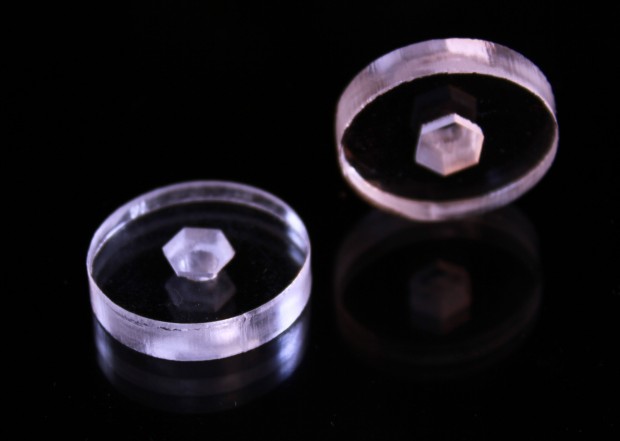
Counter-Sinking Hexagonal Holes

IMG_9979

IMG_9980

Cool – you can laser-etch hexagonal bolt-holes 1/2 way through acrylic sheets by repeatedly rastar-etching slowish speed, highish power… on my machine (little 60W machine) speed=100, power=70 – 2 passes. Not particularly fast (each one takes about 4 minutes)… but it allows you to do the formerly impossible… each time identical to the last.

For circular holes, I’ve found it’s a hell of a lot faster to cut a dense spiral than it is to etch a circle.

In other news, I just made this:

scale_9

scale_1

Draw n Cut Laser System

( from )

That’s pretty neat… although as someone pointed out in the comments somewhere or other, why not just use a mouse?

As far as I can tell it’s a heavily gesture-orientated snap-to-grid system, which is really cool – but if you try to go off the beaten track, you wind up with A LOT of failed attempts.

It’d be a useful adjunct to built-in laser-cutting software though – which is pretty primitive… and one of the few times that a see-through screen like you see in sci-fi movies would actually be useful. You could just trace your rough-design on the lid of the machine… like one of those ill-advised microsoft-touch-sensitive tables. Use your finger to direct a laser-dot on the material below.

We haven’t seen a price-crash with lasers like we have with 3D printing… or we have, but it hasn’t come down as far as fast. Like DSLR camera-gear… there’s a glass-ceiling… or floor – precision glassware costs… I suspect that’s what it is.

Meantime, Indiegogo Rostock

I like rostocks… not sure why… I suspect it’s because I suspect that they might be able to print outside the box. It’s like an opposing-muscle thing that they’re using – and being composed of a couple of billion years worth of evolved opposing-muscle systems, it just seems like it’s got more potential than cartesian. Straight-lines lead to hell.

Chandeliers from The Future

chandelier1

Because who here can honestly say that they don’t want to live in a chandelier?

These students from “An Inconvenient Studio” which might be in Italy or America or somewhere, have gotten fed up with waiting, and made their own – which is CNC-fabbed, and has robotic, arduino-powered leafy things that move according to whatever the person underneath is doing – a bit like Ceiling Cat, but more aloof and non-judgemental.

This is from http://www.i-m-a-d-e.org/ which also has this

feathers1

feathers2


The Flickr photostream that that came from also has this:

chandelier3

Which from a distance looks like a fan, but on closer inspection is some sort of giant wooden venus-flytrap robot that suddenly grabs people when they’re not expecting it, and makes them spill the large tray of drinks they were carrying etc.

I like that i.m.a.d.e site – it’s got the same 3 column layout that notcot has – similar to the way Opera interprets RSS which is almost always easier to read than the actual website that it’s linking to.

Things I learned about life from tinkering about with Ponoko.com

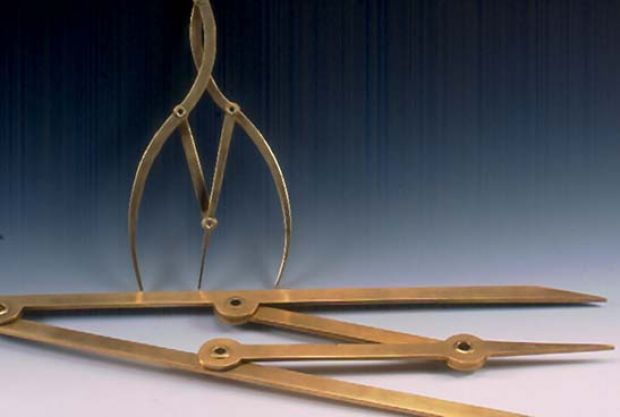
Ok – so there have been a couple of iterations of the golden-mean caliper thing.

It started out as a cardboard thing:
calipers7

then went through an interim straight-legged phase, from a design heavily borrowed from the internet
calipers6

And then it went a bit curvy
calipers4

So there you go. Edited hilights of a dangerous life.

So. This is what I’ve learned (about life etc)

1) You’re not going to get it right the first time.

No, not even you.

2) You’re not going to get it right the second time either.

Forget about it. You’re just not – especially if there are moving parts or the parts need to “work” with each other etc. Everything’s a bit wobbly. Nothing’s a perfect fit.

3) Design to your vitamin parts.

Find a button and make a suit for it in other words. If you drill a hole thinking you’ll find a bolt afterwards, you won’t. It’s a bit like Liebig’s Law of the Minimum: You will be dicked about by the things made by other people. 3rd-Party-Dickabout-Syndrome.

4) You won’t learn about the weaknesses/capabilities/possibilities of the materials until you actually physically play with the materials with your actual hands. In real life.

You need to cut your coat according to your cloth, in other words, and you won’t get a feel for your cloth until you’ve actually physically touched it. Once you’ve done this though, possibilities will blossom. Reality is your friend. Treasure it. Hang on to every moment with it. You’ll miss it when it’s gone.

5) Get a Dremel.

They’re useful. Get one with variable speeds.

drem1

6) Wear safety glasses when you use it.

It may (to your diseased imagination) look like a sex-toy with anger-management issues, but 30,000 rpm is A LOT stronger than you are. Bits fly off. Things explode.

7) Just because you’ve got it all worked out in your head, doesn’t mean it will work in reality

This should be written in biro on the foreheads of every free-market-fundamentalist in the world. So when they get home and look in the mirror they see


head

Just because you’ve got it all worked out in your head, doesn’t mean it will work in reality.

There. I’ve said it.

This bit me on the arse in the following way:

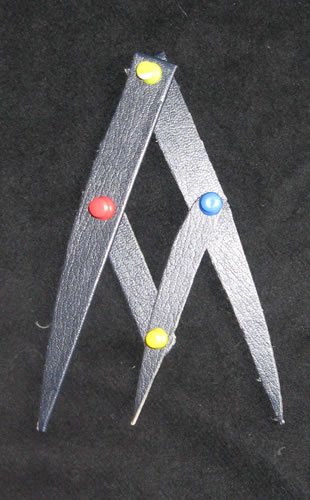
I thought I could make a better caliper by curving this, countersinking that… so the tips all meet up. The trouble with the straight arms one is that (unlike scissors say) the tips don’t close at a single point – the middle joints bump into each other so it can’t close properly.

So I figured that if you countersunk the middle joints and carefully arranged the layers, you could in fact get the points to close at a single point. I had it all worked out.

In my head.

What actually happened was this:
calipers5

When all the points line up, the middle holes stop being 2 sides of a triangle, and instead become one point in an axis… which may then rotate freely. It’s mathmatically impossible for the fundamental maths behind this design to work… and for the tips to close.

And although I spent 6 years studying trig at school/uni, I’ve forgotten it now and can’t be arsed having to learn it all again. I’ve failed etc.

Still. Nice design innit? See how it glints evily in the moonlight… mmm… shiney…

New Slang : The Unfolding Grammar of Emergent Techs

I think maybe we just haven’t learned to walk yet.

We now have these things like laser-cutters, 3D printers (well, almost) and a rapidly advancing miscellany of tech wizardry, but we’ve been watching television for the last 40 years, and even if we hadn’t been – materials and techniques have their own traits that you don’t find out about until you play with the stuff. Materials have their own languages – and laser-cutting in a way, creates new types of materials. Acrylic that you cut with a laser is qualitatively different from acrylic you cut with a saw.

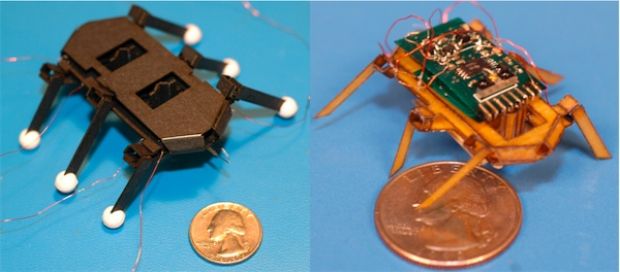
And that’s why I like these:

bugs1

(via)

Not because they’re another hexapod variant, not because the instructions / plans etc are posted as part of the artefact, not because as an internet inhabitant, they’re not bound to any specific address but live in a number of different places

Although I like all of these things as well – I mainly like this thing because it details a quick easy way of making hinges using a carboard-plastic lasercut composite.

A new piece of DIY grammar in other words – a new little building block that other people can use elsewhere. I used to be paranoid about accidentally being transported back in time to the 13th century, and not being any… use… because although I’ve spent my life surrounded by all this technology, I don’t know how to make any of it. Well I think we’re moving into an era where we (kindof) know how to make things again. I have a feeling we may be moving into a state where we can do things for ourselves – because it takes less time to supply our own needs than it does to work in the old-economy, and our quality of life is better. Arduinos and Gardening.

We’re still not there yet with robotic micro-muscles… but hinges? That’s a little step forward I think. One tiny step for Man, one mighty leap for Antbotkind.

There’s this thing from Lady Ada as well :

It’s still simple, but it’s more clever and complex than the bulk of the other laser-cut stuff, which is primarily ( to these jaundiced eyes) about making trendy shapes. I think there are more building blocks to come – that thing with the flying penguins for example, was an example of a set of simple techniques that could be applied elsewhere.

I think there are whole new languages that we need to learn for mass-fabrication to get underway. And when it does, it won’t be about making things we already have, it will be about making things we haven’t actually thought of yet… because we don’t learn the grammar until we play with the stuff.

To thine own materials be true, in other words.

Attacked from behind by the 20th Century

Well it had to happen sooner or later didn’t it?

Someone has complained about my publishing Golden-Mean Calliper designs that were too close his… and fair enough, they are hell of a close even though there are numerous examples of prior-art all over the web… he seemed like a reasonable bloke, so why argue?

So. Although his original request was that I err… censor? my site to sustain the 20th century notion of intellectual property (denying information to the The Universal Mind), what I will do instead is repeat the de rigueur 21st century response, which is to produce a better design, and open-source it.

The original design had a couple of flaws – the tips of the callipers don’t meet in the middle, and the bits where the rivets/bolts go are hell of a flimsy.

So… I’ve put together a swoopier design with reinforced connector points, allowing for a more standard-gauge rivet/bolt, and designed so the points do in fact touch. I haven’t Ponokoed this yet – so don’t go mass producing this thinking that it’ll work straight off the bat – it will need a bit of tweaking I suspect.

This design is released under Creative Commons Share-Alike license… and is free to all, including the original complainant.

Creative Commons License

and looks a bit like this:

caliper3_eg

The .svg is available from Ponoko here

Lasercut boxes and whatnot

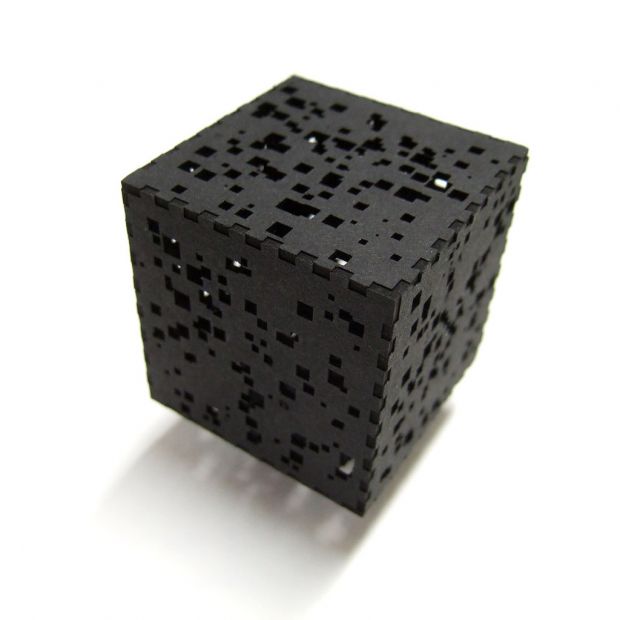
These are quite cool… a guy’s got his own laser-printer and used it to make lots of little boxy, lighty, connectory things.

For this level of experimentation you kindof need you own cutter I think – it would be amazingly expensive to do all this with Ponoko.

lased1

lased2

lased3

lased4

lased5

From Jared @ Flickr

Ponoko : First attempt

Well that went quite well I think.

Attempting to make a set of Golden-Mean Calipers a bit like this:

goldenmean1

Which seems reasonable enough etc. So.

1) Need to learn how to use Inkscape. No worries, lots of tutorials etc, and I needed to get away from software that won’t run on linux in any case. Inkscape does. It doesn’t save as gif or jpg though, which means I can’t use it for what I need to use it for 99% of the time.

2) Get my head around Ponoko’s colouring conventions… ok, a few questions there – so I went to the forums and got replies within 24 hours or so. Looks like they’ve got someone replying to forum messages once a day.

3) Upload the thing, see how we go.

Now, I did have a bit of a grumble on the forums about how you can’t actually tell how much it’s going to cost before you go through a long drawn out process. As they need to calculate the cutting time, I thought… ok, maybe fair enough.

To cut a bit of a long story short though, here’s a couple of charges here:

NB: If you are considering using this design… please don’t. Someone has complained that this design is too close to theirs… and besides, this design has a couple of flaws – that have been fixed in a better design, here.

Design 1

caliper11

Design 2

caliper21

If you do decide you want to buy some of these (they are the most elegant design I think, and there has been a fair bit of trialling and erroring done… my designs here are different from the holyholo ones in that they’re a bit weak) – please visit this site – www.holyholo.com

The orange bit is the box that they supply to make sure you fit everything in the available space – this one is the smallest possible space etc – 18×18 cm. The drawings are blue so the laser knows where to cut. Black is for engraving etc. You shrink your lines down to .03 of a mm, which means they’re so light you can hardly see them. You get used to it etc.

Costs:

Design 1 Clear Perspex Design 2 Clear Perspex Design 1 Brass Design 2 Brass
Making 4.37 20.57 16.37 77.20
Materials 1.60 1.60 60.39 60.39
Total 5.97 22.17 76.76 137.59

All in US dollars.

There are a load of different materials, but I want these to be brass so I made a plastic one for prototyping, and a brass one just to check the costs… which means 60 US$ for a 18×18 square of brass. When you buy a bit, you buy the whole piece then throw the offcuts away. They don’t recycle.

The “making” cost is the time the laser beam sits on the page… which is pretty linear by the looks – and quite possibly, a completely arbitrary number. I wonder what it’s based on. Electricity use?

Anyway, if I cram as many of these things in as I can, it comes to about 5… which means comes to 27 US$ each… which is about $50NZ each, which is about double what you could retail them for I think.

Okay… proceed to checkout… add 2% sales tax because I’m in NZ… the postage…

… $10… what? NZ? No… it’s $19 NZ.

Right. Ok. That’s seriously taking the piss isn’t it? I’ve read people from overseas bitching about the postage costs in the forums. You can buy calipers – proper big steel ones with an LCD read out on trademe (which is a bit like ebay) and the postage is $5.90.

So there you go.

Nice idea, but my bet is if the model works, then Ponoko are going to be completely blind-sided by a US/EU operation that does the same thing, but who recycles their offcuts and who don’t take the piss with postage.

Then in about 3-5 years, laser cutters are going to become cheap enough that your local print shop (or something) will have them, knocking out the postage costs altogether.

,

An ode to Cognitive Surplus.

A celebration of the inventive backwaters of the human spirit... a celebration of people who would appear to have far too much time on their hands...


A celebration of laterality.


If you come they will build it.


By knowledge shall the spheres be filled.


Golden Mean Calipers