GENOMICONrss

rss

The Crowd-Sourcing of Intelligent-Design

missing links

Fishy-Wishy Watch-Bots

Sorry. Once I’d thought of that title I couldn’t not use it, even though it’s crap… but go on, say it out loud. I dare you. You know I’m right.

I’m talking about this:

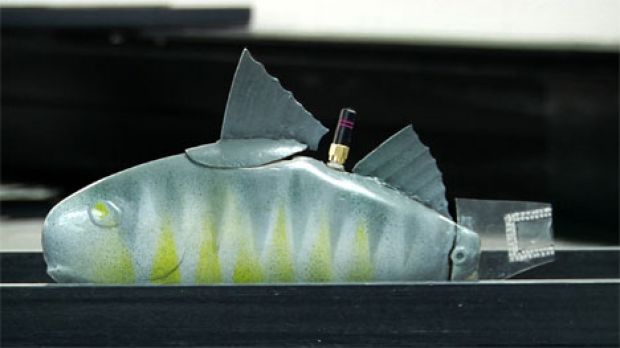
fiish1

Which is a pollution-monitoring fish. It “watches”. See? See what I did there?

I found this interesting because they’ve developed a new type of muscle - current->movement, though I’m not sure how fast or efficient it is. Quiet, fast, strong robotic muscles are a missing link.

There’s going to come a point not to far off, where the bulk of the traffic whizzing round the internet isn’t porn, or one massive idiot-driven flame war… but is actually machine generated. And most of it (alas) probably won’t be anything useful like environmental-monitoring, but will be people looking at themselves (or other people) for the most banal reasons. London double-decker buses now have about 20 CCTV cameras… on the downstairs floor alone (I know, because I counted them when I was in one last year). Who watches this stuff?

Robots, that’s who.

But back to the fishbots… why stop at monitoring? Why not get them to eat the stuff? I mean do you know how much of it there is?

pollution1

There’s a plastic-slick twice the size of Texas in the Northern Pacific.

Really, the only way to tackle this is with something that breeds… something who’s numbers increase exponentially, and that’s a way off… but in the meantime, it would be cool to have a competition or something… like Robot Wars, to invent robo-fish that can eat the stuff.

And then at some point (I suppose) they’d learn to eat each other… force to really, as the oceanic pollution diminishes… big fish, eat smaller fish and so on.

And then one day, an aircraft carrier disappears.

More on Robotic Muscles

Someone sent me this earlier (cool, I love being sent stuff)

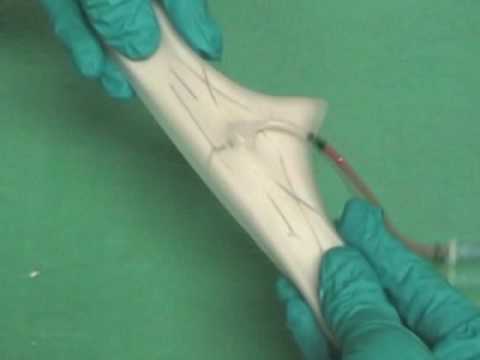
Which is possibly the weirdest robo-thing I’ve seen… like, ever.

Pity it’s pneumatic… because pneumatics need compressors, and compressors are big and heavy and hungry. Still… wow.

Anyway, that inspired me to look up all the new robo-muscles on youtube.

And yes, they’re all slightly disturbing

A lot of them seem to be made out of that memory metal. I have my doubts about this stuff… because I can remember Omni magazine going on about it back at about the same time that Star-Wars came out – and not a hell of a lot as happened with it since.

Although someone has managed to make a glider that uses them to fly into the light:

This one is driven by dielectric elastomers.

… and for those of you who don’t know what dielectric elastomers actually are…

neither do I.

But they’re used to steer this blimp:

So um… there you go. That was a dismissively brief post given the amount of stuff that appears to be going on… A lot of the videos seem to be coming from this… http://www.environmental-robots.com/… which has loads of memory-metal videos etc… and a website that at times seems to show the classic signs of memetic addiction.

But a lack of polish is generally a good thing I think… when people starting to compete on polish generally indicates that the ideas have run out.

Anthropomimetic Machines

New word : things that mimic humans : Anthropomimetic

This is neat – in a slightly spooky sort of way.


(from)

A different take on robot muscles… which I still think are a bit of a missing link, and this although interesting, doesn’t quite fill the gap either.

The polymorph stuff looks interesting. I wonder where you can get some?

Oh. Everywhere. £4.75 for 250g on ebay. Actually, now I come to think of it, this stuff has been around for a while – I can remember it being on some sort of UK infomercial about 5 years ago.

Soft Stroke Sensors and Wanking Eggs

Firstly, DIY touch-sensitive fabric:

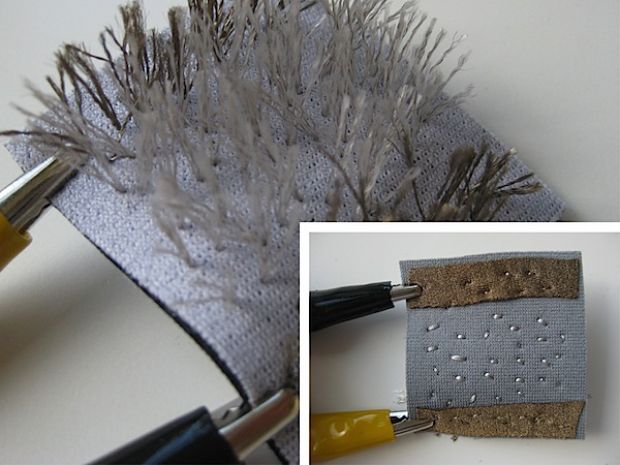
sensor1

From Craftzine – lots of conducting wires sewn close together that behave in different ways according to how they’re touched.

One of the ways that living organisms differ from machines is that we’re covered by a sensor-layer. The things above don’t work by tweaking hairs (unless you count whiskers) and even if they do, it’s not due to bare electrical wires (which will have trouble with water), but this (I think) is a step in the direction of increasing robotic tactile sensory resolution. I think what we’ll eventually wind up with is some sort of web of piezo cells embedded in a gel.

Speaking of which, and going directly into NSFW-Land, check this out:

tenga

Solving problems you never knew you had. Their site has all manner of remarkable gadgetry, the bulk of which seems to be use-once, and about $20 US a go, so you wouldn’t want to bungle it etc. As you occasionally do.

The Touchy Feely Wearable Panopticon

dogcam

Dogcam. It’s supposed to be a petcam, but I can’t imagine it not turning a cat into a struggling furry ball of hooks and spitting-fire. Dogs are more malleable. Ductile etc. Maybe it would work for ducks as well. They’re ductile.

Neat idea though – especially when cameras get small enough to mount on insects etc – bringing one of my favourite subjects: Spider-Safaris one step closer. First-Personism again

These things have also been made for humans apparently – years ago,

blokecam

There’s a great article about Sousveillance here – the universal panopticon, and The Blue-Spaghetti Monster that I was on about earlier. Little brother looking back up the hierarchy… which is one of the things that is starting defining so many conflicts – Iran, The London Riots etc. At one point, if you went into any shopping mall in the UK and tried to take photographs, the security people would jump on you (especially, I suspect, if you were taking photos of their CCTV cameras). These days it’s kindof moot though because everyone has a cellphone and everyone seems to be taking photos with them all the time.

It’s a simple leap from this, to having some sort of peripheral which allows you to have a lens mounted on glasses or a button, ready to go (or even going) all the time.

Which kindof leads into this…

clothcam

Which is a Fiber Fabric that Could Create Whole-Body Camera – which contains the C-word “could”, which is one of my least favourite… but it’s an interesting concept to me, because not only…

“Scientists say the optoelectronic fiber could lead to bizarre new imaging products like a wall-sized, all-seeing camera or a soldier’s uniform that captures 360-degree views.”

… but it kindof represents a missing link. A sensory mesh.

Prosthetics have come a long way (and are progressing rapidly) – this video turned up recently:

Something that’s missing from these prosthetics – or robots generally from a bio-mimicry point of view is that real organisms are covered by a layer of nerve-cells – not a single censor, but a whole mesh of them, reporting back an entire “touch-picture”.

So there you go. Starts off on one thing, winds up on another… tenuously connected, but I can imagine this scenario of immersive-sensors. Where everything everywhere is being watched or recorded all of the time… which seems like a terrible or scary idea, but I have this feeling that the universal mind gets what the universal mind wants – and maximum sensory input is one of them. It wants omnipotence.

I think.

The Thinking Man’s Einstein

A robot using what looks suspiciously like Genetic Algorithms to learn how to make facial expressions. Might not be of course – but Genetic Algorithms are so simple and produce good results blindingly quickly… that’s how I would do it.

I think this is the future of Robotics – creating machines that start out not knowing what they look like, then learning to use their own hardware… and then a bio-link being created so a machine can learn how to control a living organism. There have already been small stumbling steps in this direction that I’ve gone on about elsewhere – this Einstein Robot is a movement in that direction.

One of the advantages of this approach is that you can de-couple software and hardware. The software that’s used to control a combine-harvestor can be the same as that which controls a daddy-longlegs. You don’t need to reprogram specifically for each new device – which means machine-evolution can be faster.

What looks like another movement in this direction is the recent creation of the long-predicted “Memristor” – a device that takes charge and creates magnetic flux, which I must confess I barely understand – but it looks like a missing link, and a mechanism widely used in nature to allow smart-reactions from organisms that don’t actually have brains… and, according to the article, what modern tech basically does with hundreds of chips, is to simulate the workings of a single memristor.

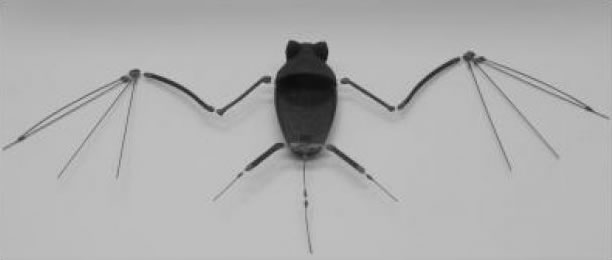
Missing Links Waiting to happen : Robo-Bats

batbot
(from)

I believe virtually everything I read, and I think that is what makes me more of a selective human than someone who doesn’t believe anything… but until I’ve seen a video of this thing flying…

The point though is though, that it’s using memory-metal for the muscles – pass a current through it and it moves. I can remember reading about this stuff in OMNI magazine in the 70s… and thought the future had finally arrived (actually, it was only just being invented), but nothing much seems to have happened with it since. I think that finding robot muscles other than magnetic-induction type motors is fairly fundamental in moving things forward into proper sci-fi land though.

I’m not entirely convinced about this fluttery business. I think the reasons moths and bats and whatnot have wings rather than propellers is more a case of evolution designing around a physical weakness in multi-cell systems than one being more efficient than the other… I mean, which looks more stable to you, this:


(from)

or this

?

Ok – about the same, but the flapping to me looks like a it’s basically two propellers doing two back and forth semi-circles rather than a full rotation… and I suspect very strongly that the reason it’s filmed in slo-mo is that at normal speeds, they only managed to get seconds of stable flight at a time. There are a lot of flutterbots on youtube, and they look as erratic as hell.

I suspect that stability basically comes down to smarts… as you’ll know if you’ve ever watched wasps raiding bee-hives… bees bumble about and crash all over the place* while wasps can zoom straight through really narrow gaps – and they’re basically the same hardware.

Still… tiny muscles are to robots what light-gates are to computers. Maybe.

* Christ on a bike, how much time must people have on their hands to dub a scream over a bee crash?

Amazing Flying / Swimming Penguinbots

Ok. Even though in the last post I said I was trying to avoid constantly going on about robots, I’m going to go on about them again, because these ones are simply too amazing, and touch upon a number of my favourite concepts – eg: ideas from nature, anthropomorphism etc.

penguin

It has a snouty nose etc. Marvellous. They use 3D sonar to avoid collisions and talk to each other.

It comes from Festo - who are a bit of a powerhouse of innovation – the same people who came up with the robotic jellyfish

and the Fluidic Muscles – robotic muscles being a bit of a missing link that I was on about earlier – these are pneumatic though, so still have the same problems at the compressor end.

The robotic fin-gripper in the first video is pretty impressive as well – looks like the claw bit might be 3D printable… one of those things that you can kindof tell is ‘right’ because it’s so simple.

via www.technovelgy.com

Missing Links

In some ways things are easy to predict… we’re just waiting for pieces of the jigsaw to turn up.

Robot muscles for example. I’m pretty sure that servos aren’t the way to go, although they’re dominating things at the moment. Robert Full went on about designing from nature a while back… noting that most organisms legs were basically feet on springy sticks.

“the control algorithms are embedded in the form of the animal itself.

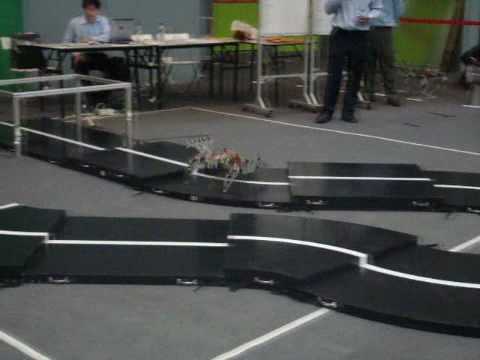
Compare and contrast… “the world’s fastest” hexapod based on servos compared with The Stanford Sprawl machine, that uses springy legs

(from : via)

The worlds fastest hexapod is a LOT faster than the others – and pretty clever – but it’s still considerably slower than the considerably less clever model…

… and it’s all down to the muscles. A missing link in robotics is muscles. I went on about air-muscles a while back… and pneumatics is pretty interesting because it does all clip together like lego… but compressors are too big at the moment.

So anyway. There it is – missing links. Other missing links that I can think of off the top of my head – that we are creeping towards slowly:

  • fast-charging, long storing, more efficient batteries
  • pennies per watt solar electric
  • cheap and easy oil from algae extraction
  • smooth 3D printing
  • Direct to retina screens
  • a brain -> machine link

etc etc. A bit like flat screens ( the thing you’re probably looking at right now)… classic “Are We There Yet” technology that’s predicted decades in advance and takes an eternity to turn up… but when it does (as predicted) it changes everything.

Air Muscles

These are cool because they’re fast, strong and quiet. Not sure how small they can be though – and I think that creating the compressed air in the first place might be a bit of a bastard.

Instructables etc

,

An ode to Cognitive Surplus.

A celebration of the inventive backwaters of the human spirit... a celebration of people who would appear to have far too much time on their hands...


A celebration of laterality.


If you come they will build it.


By knowledge shall the spheres be filled.


Golden Mean Calipers