GENOMICONrss

rss

The Crowd-Sourcing of Intelligent-Design

emergent morality

Butterflies, Wheels, Worms: and the Turnings Thereof

It’s all about books.

Ok, first you have to watch this.

WTF? It’s 47 minutes long?

Ok – you don’t have to watch it, but it would be better if you did.

It’s one of those tarted-up dramatized documentary things that someone’s pirated and put up on google. It’s about the Venetian Inquisition back in the 1500s. There are two horrible bits – to do with burning and boiling – you can skip past those – but please do donate some money to Amnesty International, because in the name of religion and politics, this stuff is still happening today.

It’s about books.

The First Gutenberg Shift in fact – the church had a monopoly on the flow of information – and in particular the flow of information from people to God. This gave them an Empire, and license to create laws, and enforce them. Brutally. They had every thing sewn up, from top to bottom.

Then people learned how to make books (skipping-the-bishops) and the church responded with The Inquisition, and an interpretation of scripture that granted them (again) license to behave as cruelly as blind faith and the the medieval imagination will allow. All under the strict oversight of the law. Their law.

The reason I’m going on about this is (as well you know) that exactly the same forces are at work today. Digitisation has allowed people to do for themselves what they once had to pay corporations to do. “To Replicate and Distribute” – this is the value that corporations once provided… and it allowed them to hegemonise our culture, but now we no longer need them.

So now the Copyright Cartels (big publishers, owners of “IP”, et al) are attempting to change laws to maintain their empires.

True to prototype, they’re using the law as a terror-weapon against people who try to route around their distribution systems – this is why the original students (students again) sued for file sharing, were hit for something like 18 trillion dollars each. This is as close as a modern lawyer can get to burning someone alive.

In addition to this, they’re using the tried and true tactic of conflating this new freedom with “indefensible” crimes. So you will hear about child-abuse and terrorism – it used to be heresy and witchcraft. (and somewhere out there, circling in the dark is a nagging irony that these new “indefensible crimes” of child-abuse and terrorism, have this uncanny habit of turning up in shadows of the old monster, religion… but let’s leave that for now)

Still, The Corporation today is not as powerful as the church of yesterday, and this pattern of prosecution/persecution has now fallen back into something a little less theatrical and a little more pecuniary – people are sued at a level where they’re frightened of going to court, so settle for a justice-free fine.

Corporations after all are not generally staffed by monsters – it’s the system that’s the monster, the people are just people.

Anyway, it’s about maintaining empire in the face of a sweeping environmental change.

So the first Gutenberg shift was about books. Watch the video.

And now:

scan12
(from)

Although this probably isn’t going to shake the new empires of control to their cores, it does represent a nice symbolic circularity. There are now communities of people experimenting with the digitization of books.

And it only started 6 months ago – in June 2009.

This is Web 3.0… aka, The Next Sweeping Change. It’s memospheres of hardware. If you think it’s anything else you’re dreaming.

This technology has been around for a while of course – there’s a 4 year old ad here for an ATIZ for $35.000 (LOL)… and the 1000 frames a second Japanese variant. It’s only a matter of time before someone makes one out of lego. (actually, they already have)

I do find it massively ironic that some of the companies making this technology actually try to patent it (similar to the irony of the video at the top of the page having been pirated, in a 500 year old echo of the subject matter)… but – it’s a little more interesting when people do it themselves. It creates a kind of tech evolutionary fast-breeder.

People doing things for themselves (eg: The Whole Earth Catalogue Generation, Punk, Rave etc) is like a cultural flooding of the Nile. What went before is swept away and a new fertility is distributed – to anyone willing to pick up a shovel, or a guitar, or a typewriter, or an Arduino.

DIY Book Scanner Introduction and Motivation from Daniel Reetz on Vimeo.

I find the justifications given by the book-scanners interesting as well. They all seem to have this “morality” which is all about rescuing books that are out of print, or unavailable. It’s all about the long tail. It’s all about bringing literature to the blind, the disenfranchised. It’s all about fearfully avoiding stepping on the toes of the “owners” of mainstream information.

Well I say to hell with them.

The real reason for uploading information is to get the whole of human knowledge into the universal-mind, and make it universally available. That is the end that we’re driving for… that is the New Protestantism that hasn’t yet coalesced around a single unifying morality – that hasn’t learned its own name yet.

The “rights” of massive corporations in the big-picture are about as morally important as the “rights” of the Medieval Church to sell indulgences. They can spin it any way they want… they can back it up with force… but in the end, they don’t matter. The actual, physical environment in which they (and we) exist is now different, and it will never go back to how it was before… and really, why would we even want that?

It was the responsibility of previous generations to commit all human knowledge to writing… for future generations, so knowledge would not be lost. It is the responsibility of our generation(s) to digitize human culture. Not just our own, but all previous generations as well – so it is universally and freely available. “Money” will have to adapt – we’re don’t exist to serve money, it exists to serve us.

We have a moral obligation to artists, and art, not to economic systems.

So that’s my thought for the day.

Mosaicbot

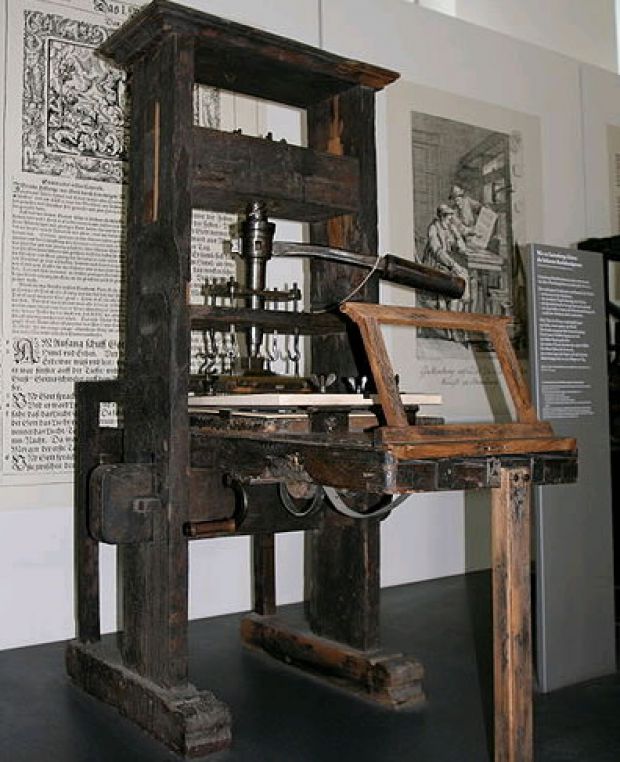
That’s pretty cool… though to me, the first thing that springs to mind isn’t mosaics, but moveable type. And although it’s state of the art, it still looks like an early version of something. Like this did once:
press1

(and speaking of which, there’s a nice collection of them here)

In a funny sort of way, it’s the same machine… or part of the same machine, and the First Guttenburg Shift is the same revolution as the Second – the one we’re in now. 500 years isn’t that long… not when we’re talking about the scale of things that we’re talking about… evolution. It’s the ‘B’ of the Bang.

I get this feeling when I’m programming sometimes… that coding isn’t about architecture, it’s about archeology. It feels like brushing away at the surface to reveal something that already (as a potential) exists. This is part of the reason why I’m violently (yes violently) opposed to software-patents. They’re trying to ringfence fundamental rules of mathmatics and reality. It’s fundamentally immoral. It’s cheating future generations of the shoulders that we were given to stand on when we were still small.

But anyway… brushing away at this great big… thing… this hidden machine-city. FOR loops are a fundmental law of nature. Object Orientated Programming, Relational Databases, MVC. They will have their day, be superceded, reinvented – but I can’t help but feel that in a very real sense, they weren’t ‘architected’, they were discovered. Uncovered.

Which kind of begs the question… what exactly is it that we’re building here?

Because that robot video above… is OBVIOUSLY just the beginning.

Twitter : Saints, and Eye of Sauron

I bet you thought it looked like this:

twitterbird

And by and large that’s what it is. It’s lots of batty people, chattering, chittering, twittering… tumbling after each other, bubbling for attention and LOLs…

… but recently it’s begun to strike me as also, occasionally looking like this:

sauron

Attention overload…. excoriating like a baleful eye… if sunlight (encouraged by transparency) is a detergent, then twitter is a magnifying glass… scanning the Mordor that the 20th Century left in its wake, and charring to cinders anything that it deems unfit.

Yesterday it was Carter-Ruck trying to censor the Guardian to protect an alleged polluting oil-trading company… and rolling back about 300 years of constitutional law to do it. Today it’s a bigoted tabloid journalist.

tweettrends

See those keywords? They’re almost all about her. She wrote something mean and homophobic about a young celeb who just died… and The Eye of Sauron has turned on her.

And I’m sure it will blow over as quickly as it started… but Carter-Ruck won’t be the same again. They’ve been over-exposed for all the wrong reasons… and today’s tabloid-journalist? Who knows. Maybe her life will rapidly go back to normal… but the Press Complaints website has crashed under the weight of people… weighing in, and it didn’t even do that with Sacha-Gate with 34000 complainers.

And if anyone tries to google either of these people ever again, what they’ll see is the fallout from the Wrath of Twitter. According to google, this is who they are now… and this is a stain that it’s almost impossible to remove.

Something that’s appeared in both of these screengrabs is @charltonbrooker. He’s a bloke. He writes for the Guardian and is particularly hilarious. Stephen Fry isn’t there, but probably should be, as he attracted attention to both of these incidents. Charlie has got about 75000 followers. Stephen has something approaching a million. It’s hard to tell with twitter… they periodically cull non-active accounts.

Anyway, Stephen is Twitter’s Patron Saint… and Charlie Brooker in England at least… well, not a saint exactly… Not even a Martin Luther… but possibly up that end of the cloisters I’d say. They’re both comedians.

I’m pretty sure it was Stephen Fry who managed to get the (would-be) law changed over the black square thing… NZ’s 3-strikes variant. I went along to the protests… and there was about 100 people there, if that. Stephen however got it in all the papers. He spans two worlds… and it seems, in England (and The Commonwealth) at least, Twitter is filled with the sort of person who maybe likes Charlie Brooker… but definitely like Stephen Fry.

And this is no bad thing. He has wisdom and humanity… and makes these attributes contagious… not entirely dissimilar to the documentary he did about bipolar disorder… accidentally making the condition sound glamourous. He really is that good, LOL. Sob.

My favourite Stephen Fry stories/quotes:

1) On Critics: Said the way he thinks of critics… is imagining them in the queue at the pearly gates… God saying “well what did you do with your life”, and if they’d been something else they might have been able to say “well I was an artist, I painted pictures” or “I was a writer, I wrote plays”. But instead they’d have to say “well actually, I didn’t do anything – I just criticised what other people did”

2) I can remember him talking about Kathy Burke… saying that “there are people who when you see that they’re in a film or a play or something you think “oh good, So-and-so is in it”. Well for me Kathy is one of those people – I always think “Oh good, Kathy is in it”.

It was such a lovely thing to say about someone… and the way he said it… Well, you know – the Stephen Fry charm… and I was left with this feeling of how devastatingly powerful sincere niceness can be. In that moment he soared in my estimation, and he’s never unsoared. I love him.

3) He has this story about someone who survived 9/11… because instead of going to the office that morning, he stopped off to exchange a dreadful shirt that his mother had bought him. Got to work too late to die.

And the way Stephen tells it, is that there must have been a moment previously, when his mother was buying a shirt… thinking of her son, what he would like… trying to imagine… and her hand hovered over the shirt-rail… and in that moment, his life hung in the balance. And she made the wrong choice. And he lived.

So um… yea, as Patron Saints go, I can’t imagine a better one.

I shudder to think who 4Chan has though… because they do this Eye of Sauron stuff as well. They’re what The Eye of Sauron would be like of Gollum owned it.

edit 1 : Charlie Brooker’s Column in the Guardian, about an hour later

edit 2 : Charlie on Twitter asking people to calm down, and not publish home addresses, ten minutes after that

edit 3 : Charlie commenting that “RT @danielmaier: Twitter = wonderful liberal weapon but sometimes I think its logo should be a pitchfork silhouetted by flaming torchlight.” 8 minutes after that.

The Blue Spaghetti Monster Rides Again

I think enough time has gone by now to say that the Iranian Twitter revolution didn’t really work… and that’s working on the pretty hefty assumption that it had anything terribly much to do with twitter in the first place… rather than being a couple of days of excitable memospherics from Western commentators with no skin in the game… and a handful of people within Iran using it as a way of getting news out? Maybe?

Still… never mind… we tried to take on a state and we lost. I think it’s fair enough to say that.

We don’t lose them all though – today a legal firm representing polluting oil-traders tried to impose a ban on reporting on parliamentary proceedings… attempting to roll back over 300 years of constitutional law.

And I’d like to make a quick aside… How dare they? I mean seriously… how fucking dare they?

My patience and tolerance for the corporate interference with democracy is really starting to wear thin – and I’m gradually coming around to the 18th Century French POV – which is… we kill them.

Still, maybe no need… the Internet responded, as it’s wont to do over matters of censorship, and in less than a day this issue became the meme-du-jour on Twitter et al, and sensing a fuck-up-that-has-already-happened, they law firm in question backed down. You can see the scale of the fuckup from this word-map from the really rather cool Trendsmap

twitterap

Yesterday all parties concerned were safely anonymous. Today they’re famous… for trying to fuck over democracy in attempt to remain anonymous. Nice shooting Tex.

I think this one (like the New Zealand black Square thing) can be chalked up as a genuine twitter victory. The Blue Spaghetti Monster flexing its muscly tentacles… because if there’s one thing The Universal Mind really hates, and is really good at fighting, that’s censorship. The Information Must Flow.

3D Pen Connectors : Consumable product life-extension

I think this is a fantastic idea

connectors

3D printed joints that turn old pens into lego-esque constructor kits… there are all sorts – from ball and socket, to side-by-side wall building to geodesic dome building.

I think eventually these would be better mass-produced via some sort of injection moulding, but as a basic concept they’re spot on – especially as old pens are tubes, which offers scope for mechanisation, wiring etc.

This is not an entirely new idea – I had a set of connectors for drinking straws a bit like this when I was a kid – and Look and Learn Magazine had “build things out of old pens” competitions back in the 70s. This particular project takes this to a whole new level though… and as so many people are now making robot, it potentially has a much wider relevance.

As an aside, the site that this comes from is also a classic case of a breach of Emergent Morality #3 – which is concerned with naming and addressing content. They’ve wrapped everything up in a flash file which means that the people who love the idea enough to evangelise about it (and work on their behalf for free) are effectively hobbled. I actually had to sit there and take screen grabs of the flash animation to create the image above. I couldn’t be bothered re-typing their text for them. This is still effectively neutered. You can’t search it, and it’s difficult to cite.

But the image above is a now a linkable resource. I’ve spent about 1/2 an hour working for them for free to increase the visibility of their project – and allow others who also think this is an inspiring project to propagate the idea.

This is illegal, and according to the old-economy morality, evil.

But the entire old-economy is itself evil, and I think this idea is brilliant, so I’m doing what I know is morally right. I’m sharing it.

This is what we do.

Emergent Morality #3 : To All Things: A Name. (And Address)

The previous emergent moralities have been

#1 : Thou shalt not impede the flow
#2 : Set thine information free

The third and last (I think) is:

#3 : To All Things: A Name. (And Address)

This one is more subtle.

A requirement for the Internet to function as a maximally huge AI experiment is that every single piece of information within it (and without it) needs to have a URI. A Unique/Universal/Uniform Resource Identifier.

A URI may be a
– URN : Unique/Universal/Uniform Resource Name
– URL : Unique/Universal/Uniform Resource Locator (or address)

eg: Romeo and Juliet:

– URN : ISBN 0486275574
– URL : http://www.example.com/example_directory/RomeoAndJuliet.html

A name and an address are the minimum requirements for information linkage.

Not supplying these to any piece of information is a crime against the internet. This is not (however) a strong morality, unless you are a blogger or developer… in which case then general reaction is generally a vague “Oh that sucks, I can’t link to it (or) I’ll have to copy it out by hand”. Information isn’t set free until it has a URN, and URL.

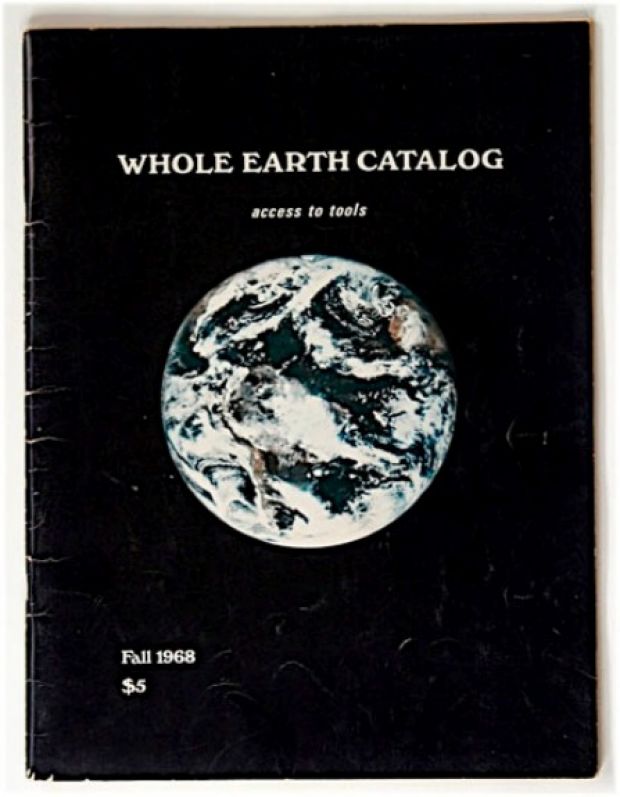
An example of this is the Whole Earth Catalog back-issue library that is now online…

whole earth

and although it’s a nice gesture, it sucks because you can’t cite anything. They’ve wrapped it up in some (fucking) flash wrapper so that the smallest granularity of linkage you can get is to an entire issue. Utterly useless.

Maybe it’s a lot of work transcribing all this to proper HTML?

It is, but I think that The Whole Earth Catalog is so beloved by it’s readers, that a lot of people might just help out for free… I know I would – especially if they allowed “translated by” links. The Whole Earth Catalog is the spiritual parent of all blogs – it was itself a type of paper-based blog, and there will never be another paper-based Whole Earth Catalog, because millions of its spiritual progeny are all over the web. We are all Whole Earth Catalog editors/writers now.

Maybe they want to make money from selling back-issues?

They can and they will – but we (fans) are their marketing arm now. We’re their radio station – and we evangelise by sharing their content. They can still make money selling physical stuff or services, but the days of selling information in it’s pure form (over and over again, forever) are… well, the environmental conditions are very much against it. And I don’t buy for a second that the idea of generating infinite wealth from a finite piece of work was ever a sustainable or moral concept in the first place. It’s certainly not a moral right, as the copyright cartels would have us believe.

The world has changed. The attention economy has arrived, and new patterns are emerging: Reputational-Capital is not built by locking your information behind money, but by encouraging your fans to free it.

To participate.

This means they can quote it, link to it, share it, embed it in other contexts and make derivative works. This way they become a stake-holder in your information, and will evangelise on your behalf. This is cheaper and more powerful than television advertising… and they’re not getting it for “free”, they’re working (and some of us work damned hard) to increase it’s value as an attention-economy asset.

Some people get this
Some people half get it
Some people are arse-over-tit backwards in getting it

Sure, the models for making money on the side are still emerging – but to try to legislate 20th Century Information-Transfer conditions into some sort of permanence is both trying to fight the tide, and is deeply, damaging culturally.

The age of participation is assiduously and belligerently rejecting the age of consumption. Adapt or die.

An interesting extension to this idea – is applying URIs to physical objects – part of Bruce Sterling’s Spime idea – and an essential part of automated manufacturing – where bills of materials can be sourced by what effectively amounts to hyperlinks. Web 3.0 will be involve (among other things) the application of URIs to physical objects.

Applying URIs to physical objects is also central to the UK governments wankingly clamorous desire to dog-tag all of its citizens (although technically, we aren’t citizens, we’re loyal subjects – we’re not owned by the government, we’re owned by The Queen). In some ways this isn’t such a stupid idea – but it needs to be completely transparent and-open sourced. We can’t trust the government to do this… because we can’t trust the government. Period. It has to be us that does it. The government needs to be taken apart and put back together anyway. It’s no longer fit for purpose.

The reason I think this is probably the last emergent morality is that they get more subtle by degrees… further down the track from this one is a whole raft of initiatives that well-meaning people have tried to establish as moral practices, but are turning out to be a colossal struggle… because (largely) the extra effort required in the implementation of these interfere with the “#1: Thou shalt not interfere with the flow“. So maybe things like micro-formats, and accessible-to-disabled-people HTML may be implemented at a “web-within-a-web” application level (eg: facebook), but at a Wild, Wild, Web level it’s never going to happen because speed of propagation always wins.

So there you go.

internet_soldier

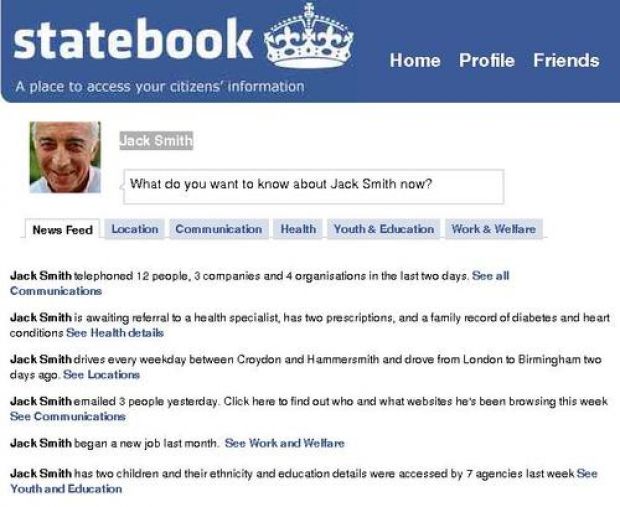
www.statebook.co.uk : If black was blue

http://www.statebook.co.uk/ is what things would look like if The Black Spaghetti Monster started behaving like The Blue Spaghetti Monster.

statebook
(via)

Remember, if you’ve got nothing to hide, you’ve got nothing to fear.

So a government as secretive as ours must be scared shitless right? Of who? Of us? Fair enough too… because I think it’s time we took a serious look at dismantling certain aspects of it.

Emergent Morality #2 : Set thine information free

My mum was going through some old (very old) photographs the other day, and she was like “we might as well just throw them out, no on knows who they are any more”, and I was all “No way, WTF? I’ll scan them and upload them to the web, old photos are sacred”, and she was all “Meh, but no one knows who they are”, and I was like “Hello? It doesn’t matter. The Internet cares”.

We have similar discussions about digitising photographs. She likes paper ones because… they’re format independent, and are proper photos and are “safe” and I think everything should be digitised because until it’s uploaded and can be (and is) replicated across different mediums, it isn’t safe. It’s trapped in a single-point-of-failure format.

To me, putting something on the web, sets it free… and makes it safe.

I think there is a subtle moral imperative to make all information freely available to everyone. The celestial jukebox. The library in the sky. Coming up is a new generation… who have never known a world where you couldn’t (in a matter of seconds) get the answer (or a pretty good shot at it) to any question you might have. Got a question? Google it. The Culture of Availability is on the rise.

I am the part-owner of a massive database of sports information… that has taken decades and millions of dollars to accumulate. We’ve opened up a big chunk of it… but largely out of timidity, not opened the rest. I know this is wrong… but fear, politics and conservation of momentum have a way of keeping the status-quo, status-quoed. But I know it’s wrong.

Ring-fencing information is immoral. We owe it to each other… we owe it to those that went before (the shoulders of giants upon which we stand), and we owe it to our children, and theirs.

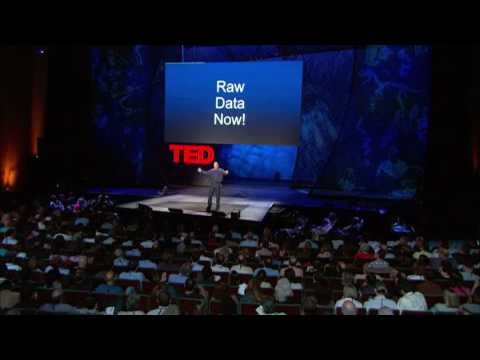
And Tim Berners Lee’s recent Ted talk was a crie de cour for just this… Free Your Information.

He goes further and makes 3 sub-rules.

The data you upload needs:

1) a unique (http) identifier
2) a standardised format
3) links to other data

I’m not sure if I entirely agree… I agree with the first two, but I’m going to separate those out into Emergent Morality#3… and I think his 3rd point is the responsibility not of the data’s originator, but everyone who cites the data. The originator can do this as well, but the responsibility doesn’t stop (or even start) there. Linking is a never-ending work in progress.

The Internet is the biggest experiment in Artificial Intelligence that we can possibly build. It is a planet-sized human-machine symbiote. You share your internet connection with your computer. Here’s the deal: It gives you answers and connections; you give it participation and data.

This is a transitional phase though – the shape of things has still to coalesce so…

a 3 minute video with an incredibly high profound/fundamental-concept to time ratio.

Emergent Morality : Thou Shalt Not Censor

Well here it is, the dawn of a new day, a new era and Barclays (god bless them) still haven’t managed to figure out that THE best way of getting publicity for something is to ban it.

So… Some leaked documents that fell into the hands of The Guardian hinting at some impropriety on behalf of Barclays in respect to Her Majesty’s Inland Revenue were promptly barred from publication… but don’t worry, because they’re freely available on the internet… someone linked to them on Twitter… so I re-tweeted…

… and wouldn’t you know it, my tweet has been deleted (by someone other than me). To be fair, 2 other somewhat innocuous tweets have also been deleted – I know this because I keep an RSS feed of my own tweets. Never mind… you can get hold of the offending documents over at Wikileaks, who’s kudos has risen sharply on the news that the Australian Government is trying to ban them.

Barclays must be panicking for some reason… my guess would be that they’re engaged in fraud… and that it’s a fair bet that all the other big banks have also engaged in fraud, and that to do so, they’d have needed the complicity of the Big Four Accountancy firms, who are also responsible for auditing against such behaviour.

So. I’ve had a look at these documents and I can’t make head or tail of them. Fortunately The Guardian appears not to be barred from publishing interpretations.

Listen thou would-be censors: We are the internet, and we most vigorously disapprove of censorship on specifically and explicitly moral grounds.

Moralities are sets of behaviours designed to protect the social group from individual self-interest. Blocking the flow of information is against the interests, the morality and the innocence of The Universal Mind.

internet1

The reason why so many religious morals are now so ugly and mean is that they were designed to protect the types of social groupings that were common back in the Bronze Age… This is why small town America tends to vote Red while the cities tend to vote Blue – it’s why the Red camp in the last election attempted to make out that “small town America” was (morally) the “real” America.

Well, censors, we now have a brand new social structure… and it’s bigger and it’s stronger than you are.

internet2

We are here.

Android : Emergent Morality : Precursor #2

I’m interested in Emergent Morality… of this thing that we’re building – The Internet: A billion nodes each terminating with a soon-to-be-obsolete computer and a vast morass of complaining humanity, at least 50% of which has below average IQ.

LOL Retards.

But I won’t go into that today, I’ll put it off again…

So today this hit the wires/waves :


(from) (the music is too spooky. Mute it.)

What it is, is a little app for an open-sourced mobile-phone platform which is currently under the nurturance of Google, of whom you may have heard.

So another site offers a new scheme where people can offer to pay for apps to be developed (bounties) and developers can go ahead and “win” the bounties. Crowd-sourced innovation and funding then. Not that google doesn’t have the resources to do this itself, but the crowd-sourcing is the thing. This is where the genius lies on a number of different levels.

So the first… the very first app to win a bounty, is Torrent Droid, and the social news sites light up like Christmas on Fire, because what it is, is a barcode reader for DVDs that searches the bittorrents for the DVD content, and allows you to send it to your home PC, so rather than buying it from the shop, a pirate version is there waiting for you when you get home.

And the reaction from the Internet?

“I don’t bother going to DVD stores anyway? Why not just do a search on IMDB?”

It’s not going to change anything… but it’s a raised finger to the RIAA/MPAA. You people are so fucked. Nobody cares. You’re finished. You’re like a bully that starts out beating up little kids… and finds that when the little kids all get together and he starts losing and tries to be nice, no one wants to know.

Next,

An ode to Cognitive Surplus.

A celebration of the inventive backwaters of the human spirit... a celebration of people who would appear to have far too much time on their hands...


A celebration of laterality.


If you come they will build it.


By knowledge shall the spheres be filled.


Weirdsky Industries