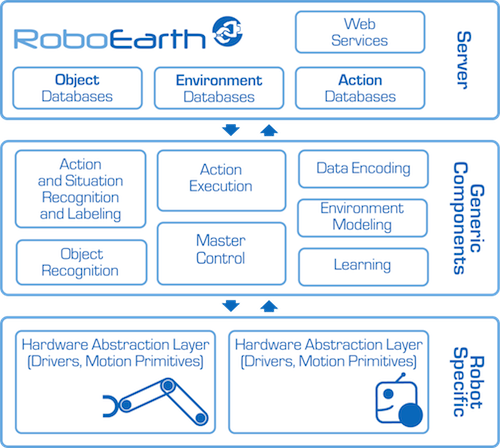
Robot Earth is a service where robots can exchange information about their environments… Like Pachube (which is like google analytics for hardware) but different devices can access other devices’ data.
Potential privacy issues of course – but cellphones are already such privacy-disasters, I doubt that it registers. It also raises the likelihood of remote-hacking I think. Like the Iranian Nuke Worm – which looks as though it was a deliberate aggressive act… but instead of fucking up a nuclear centrifuges, it messes with your vacuum cleaner. And your TV. And your Blender.
I don’t know if it’s just because I have the sort of mind that…
… but I can think of a hell of a lot more evil uses for this than good ones. There is something inevitable about it though – in an Internet of Things, that there be some universal protocol-stack invented so anything can talk to anything.
I’m not sure if I’m going to write this actually, because I’m always wrong about software. I always think things are going to be “next big things” and they never are.
So anyway, there’s been a load of fuss about a new startup (I hate startups) called Diaspora, who are a direct pot-shot at Facebook.
a) it’s an attempt to be an open (in terms of licensing/software), but closed (in terms of privacy) alternative to Facebook
b) instead of it being VC funded, they went via Kickstarter and have raised about 20 times their target… which was 10k. They reckon they can do this in 3 months.
Maybe they can. A Facebook killer WILL have to be that simple. Facebook isn’t going to be sidelined by anything with more features. That said, 3 months work is something I could do in one month. Anything that simple will (inevitably) be based upon an idea that will be easily replicable – and maybe that’s good… because they’re open-sourcing it, and it’s something that needs to happen… it just makes me a bit suspish that it’s taken a bunch of kids to think of this mysterious idea rather than the collected neurochemical biomass of the internet.
I think this is interesting because:
a) it claims (somewhere, somewhere) to automatically detect if someone is on Diaspora – if so it will use that, otherwise it will default to FB.
This is really important – this gets around the critical-mass problem… and the critical-mass problem is a hard problem.
b) the amount and source of the money collected is… The Universal Mind funding it’s own evolution
The Internet was originally built by the military to use networks to create resilience.
Which it has done incredibly well, but weirdly/ironically, it’s also created among the biggest centralisations of power in human history. We all zone off into silos – Facebook, Youtube, Flickr etc etc. This is pretty dangerous – and it’s the opposite of what the Internet was originally set up to do.
So… there’s this need for federation. A while back Google launched Wave… which had the potential for you to run it on your own servers – so it could be like a cross between gmail and twitter and who knows what else… but without a single company being in control. Google aren’t about control, they’re about sampling the fire-hose. To push it into the realms of evil, Google aren’t about control, they’re about surveillance. I think this is kindof OK.
But Wave didn’t take off – or hasn’t yet. I thought it would I thought it would change everything. It didn’t.
Opera have had a shot at de-siloing our data… but everything needs to go through their servers. Control again.
Apple? Apple have become the White Knights of Evil. “Freedom from Porn?” Please.
So anyway – what Diaspora is, is a “tick-all-the-boxes” attempt at an alternative to Facebook. I’d like to see it work – although I’d prefer it was run by Scandinavians with massive beards etc than a load of dorky American college kids – people like this guy
rather than these:
I mean I guess those guys are ok – in a funny sort of way they’re “my people” – but they look like a fucking boy-band.
They’re wrong about control as well – this idea that “once you give it to facebook, you’ve lost control… but if you host it yourself, you retain it”. Not true. Once you publish, you’ve lost it. Stop even trying.
This is worth doing though – if it is what I think it is. The one misgiving I have is whether or not you host the only copy of your information. This is bad… irresiliant. Information needs to be “I’m Spartacused”. Otherwise you’re just swapping one big monolyth with your own little personal one.
A new website where you can grow stuff in your garden and sell it to your neighbours. A bit like Etsy for plants.
–
I feel a bit sorry for these guys – I’ve been there so many times… set up a site that depends on people joining… then wait… then wait… try some desperate marketing measure to get attention… then wait… all your hopes pinned on some “next big thing”…
Maybe it’ll work – I don’t think so though… and the reason why I don’t think so goes to the heart of currency… or more specifically, currency being a byproduct of the size of social-sphere… or economy or whatever.
Which is to say, you get a LOT more from giving stuff to your neighbours than selling it. People pay neighbourhood kids to mow lawns or collect lemons or whatever because they’re doing it for the kids, so they can have pocket money – and because accepting neighbours kids like this helps tie a community together.
The level that adults operate at is a little different – the community-level glue-of-giving being more direct. The Unspoken Social Contract that Clay Shirkey was on about.
Personally I can’t imagine selling vegetables to the people next door. It would… put a wall between us. We would only participate in this if it meant that we were buying things from other people who were retired or unemployed or whatever.
But um… I guess this site caters to a wider geography than that… so um… what do I know.
I hope it works out to be honest – if it could take the pressure off people having to find a proper grown-up’s job.
And it could work the other way – when I was living in the UK I didn’t even know what the other people in my building looked like, let alone… know them as people. Maybe flogging stuff to them would be an excuse to get to know them… but you’d be so much better of giving it away. I mean if you give people stuff, they like you. If you could sell “people will like you” spray – that actually worked – as well as giving them tomatoes that you’ve grown, how much would it be worth? A fuck of a lot more than the tomatoes, I bet.
–
But getting back to some sort of point… I’ve got this nagging sense (that I can’t quite put my finger on) that the key to alternative currency is to do with face-to-face community. It’s more than networks of trust… it’s networks of dependency? Networks of gut-level responsibility?
I drew that. Nice innit. I might get it printed on a t-shirt.
It comes from Myoats, which is a site where people can make their own designs using a flash-driven mono-tonal kaleidoscope machine. People can then comment, vote on their favourites, yadda yadda, yawn. No one ever votes for mine – they just gang together and vote for their mate’s ones, and then everyone just votes for the one that’s already popular. Idiots.
But they’re not as good as mine. They all look like wolf t-shirts.
So anyway, another software memosphere, and lets face it, if you’re building a new app, and it’s not a memosphere, then you’re doomed.
What’s interesting about this though – it’s an aesthetic algorithm (though strangely, most of the favorites above have escaped its constraints). It only allows colour palettes that work… it anti-aliases nicely, it does symmetry nicely… it basically hand-holds, allowing people to produce something that looks pretty good without them having to spend years learning their craft.
And that I think is the killer app in the coming Mass Customisation revolution – the killer apps of the hardware revolution will be (ironically) software – allowing people to create things that look great, without them having to be classically trained designers. This is what Microsoft did in the last century – they basically put a printing press on the desk of every secretary in the world and gave her/him/it the ability to use it without knowing anything about it.
The money to be made in any revolution isn’t in the physical “products” of the revolution, but massifying the tools that the revolution uses. Bringing it to the people.
Right now CAD is too difficult. I’ve been playing with Inkscape recently. It’s great. It’s too difficult. What will happen, is that something like Spore, will turn up which allow people to easily create designs that look good, and which can then be plugged into some sort of manufacturing process – whether it’s a send-off thing like Ponoko, or a desktop machine.
Through this end of the telescope, the words of wisdom above seem so bleedin obvious, that there’s hardly any point saying them. Still… as far as I’m aware, the software and processes I’m talking about do not yet exist.
I’m definitely some sort of genius. Just like everyone else.
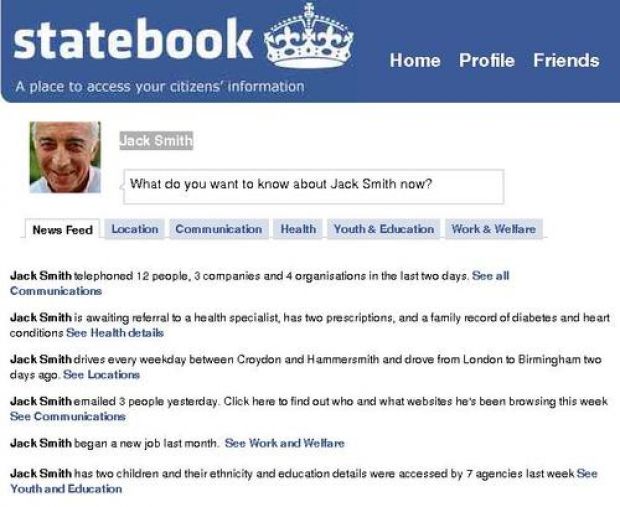
Remember, if you’ve got nothing to hide, you’ve got nothing to fear.
So a government as secretive as ours must be scared shitless right? Of who? Of us? Fair enough too… because I think it’s time we took a serious look at dismantling certain aspects of it.
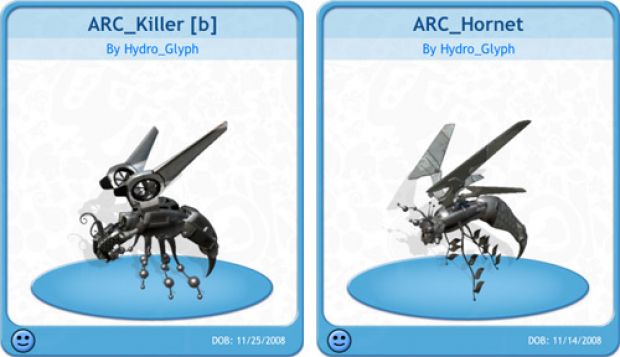
Which is quite remarkable given that this thing (as far as I can gather) started out as a platform for the crowd-sourced creation of cutsey wutsey little fowest cweatures.
As noted by Replicatorinc, imagine what will happen with this level of imagination is connected up to automated fabbing facilities… this is beginning to happen… but it’s still a very labour-intensive process.
Well fuckem. I’m not interested anymore… maybe it’s what their members want and expect etc, maybe they’d respond by saying they have a thriving community, but this memetic emasculation is… well, just that. It would be far more interesting if there was some sort of chain of descent kept in the metadata of an object… a bit like what Aviary do with their Visual Laboratory app as mentioned in the last post.
The mean-fisted, heavy handed, walled-garden, threats-of-lawfare approach that the copyright cartels, and deviantart take is a calicified relic from the previous century.
To me Web 2.0 means Memospheres. I can’t think of a single successful Web 2.0 app that doesn’t create (and nurture) an environment where memes can buzz and breed. The first one of these I ever saw was put together by Heather Champ… I went on about it here a while back.
So… memospheres…
A brain is a memosphere… from a certain perspective, the first.
A society of brains that can communicate is an extended memosphere, with a massively widened capacity for memetic-cross-pollination and memory.
A society with writing is a memosphere with radically enhanced memory.
A society with printing presses or typewriters is a memosphere with enhanced memory, quickened synapses and a massively increased number of participating nodes.
A society with computers (etc etc)….
The internet is one wacking great memosphere of connected machines and minds
The programming platforms within this new beasty are memospheres
Web 2.0 applications are memospheres
and so on.
Everything gets smarter and faster, but to operate in these (raw) environments you need to be a bit of a rocket-scientist, so sub-systems are created so others can participate. Microsoft rode to power on the back of this… but now sub-systems are proliferating like crazy… and the ones with realy get-up-and-go produce memes at a programming level as well as at the level they were designed for. Take a look at the number of apps that have been built around the Twitter API for example.
Anyway, I (and everyone else I suspect) kindof takes these for granted now (even though a lot of them seem to be running on thin-air)… the ones that interest me are the ones that look a bit like physical systems. eg: http://fantasticcontraption.com/
On its own it’s really addictive, but what makes it interesting is that you can build on other people’s designs, and some of them are pretty incredible… eg:
If you want to make a real killer game – one that takes over the whole world in a way that Tetris did, make a cross between the one above and Robot wars played in a massive multi-player environment. I have a feeling that’s what Spore tried to do, and maybe they have but they bungled it with their DRM (which is memetic eugenics) and if there’s one thing that the macro-memosphere hates, it’s anything that tries to interfere with its virality.
So the Youtube was suddenly awash with cock-monsters, and this contribution, which I think is fairly funny for some reason, though obviously in the very poorest of taste.
Still, never mind about that. Apparently Aviary came out of beta yesterday,
and as far as I can gather, their Visual Laboratory app is a take on open-source art… and looks pretty interesting.
Fairly cool I think… and the first thing that springs to mind when I see their interface, is that at some point there ought to be a convergience between that, and the Bug labs modular hardware thing, which is pretty cool, but you need to be a java programmer to write for it. Remember Buglab people, worse is better.
Not so much a replicating idea, as an idea that has world-changing potential… but which as far as I’m aware isn’t being executed in a way which will allow the thing to go viral. This is something that badly needs to be open-sourced.
What it is, is a gadget that clamps onto your electricity mains coming into the house, and which provides an easy, centralised graphical-display as to how much electricity is being used in a house/building at any given time… preferably with some sort of pavlovian thing (eg: red=too much!) so people instinctively try to keep usage within the green. I’m pretty sure that the main reason people use a lot of electricity is similar to the reason so many people get into debt… at any given point, they’ve got no idea what their current state is. Simply by being conscious of the current state pre-disposes people to being in control of it.
It’s an idea I’ve been sitting on for about 10 years… A neighbour of mine who was an electrical engineer got as far as assembling the bits… but my notions of interface were a bit limited… and were sunk as soon as we did some measurements of what different household appliances etc actually use…
… heating water swamps everything. Things like lights, TVs on standby, chargers etc were rendered irrelevant by the thermostat coming on and off.
This an area where crowd-sourcing design would have helped… because since then, a couple of gadgets have come out of the woodwork which use this idea, but tackle interface in different ways.
And they’re all too expensive and I don’t think the interface is quite right yet. It would be cool if you could morph them with something like this :
and have something which allows you to compare your scores with other people over the web. Maybe even control your appliances via the web, but that’s getting into much more of a hardware overhead. You’d need to make electric plugs that a) controlable via the web and b) measure the electricity going through them, and wifi it back to a central unit.