GENOMICONrss

rss

The Crowd-Sourcing of Intelligent-Design

open-source evolution

iPhone: The AOL of Cellphones

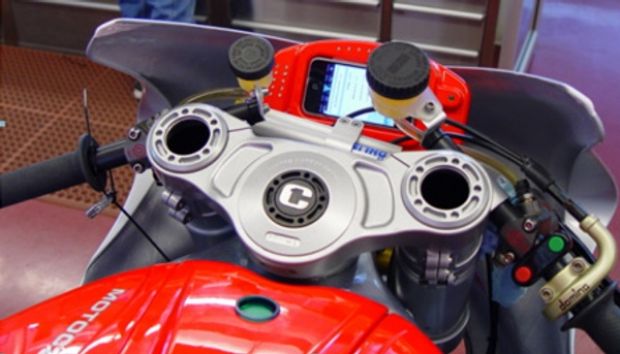
Further to iPhone becoming a competitor to Arduino…

motorbike

Today this turned up…

motorbike2

from hackaday.com

So there you go. Parallel Evolution, Machine Generation and yet another shining example of why patents are bad, and the whole lot should be scrapped. Innovation grows out of the Primordial-Meme-Soup. People have the same ideas at the same time – it’s not Morphic Resonance, it’s common memetic ancestry. Vicarious Lamarkianism.

IPhone is ideal as a separate, swappable brain for previously dumb devices… it’s actually a fairly big computer, and it has so much in the way of sensory and communication gear built in. It’s potential as something other than a cellphone, or even a computer as we currently understand them is huge.

Trouble is though, iPhone is closed-source, and therefore a bit crap.

Mark Rolston (on A vision of our evolving mobile world), suggested that Facebook was the AOL of social networking… a control system rather than a set of standards.

I think he’s right – and I think that iPhone is the AOL of cellphones… or more accurately, hand-held computers. It’s the Ooh! Shiny thing that gets people through the door in large numbers, and holds their hand so nothing can go too scary can happen. IPhone is a mobile platform for grandmothers. It fails to understand where the true potential lies – and that is out there in the wild wild web – a set of standards rather than a control-system.

New Slang : The Unfolding Grammar of Emergent Techs

I think maybe we just haven’t learned to walk yet.

We now have these things like laser-cutters, 3D printers (well, almost) and a rapidly advancing miscellany of tech wizardry, but we’ve been watching television for the last 40 years, and even if we hadn’t been – materials and techniques have their own traits that you don’t find out about until you play with the stuff. Materials have their own languages – and laser-cutting in a way, creates new types of materials. Acrylic that you cut with a laser is qualitatively different from acrylic you cut with a saw.

And that’s why I like these:

bugs1

(via)

Not because they’re another hexapod variant, not because the instructions / plans etc are posted as part of the artefact, not because as an internet inhabitant, they’re not bound to any specific address but live in a number of different places

Although I like all of these things as well – I mainly like this thing because it details a quick easy way of making hinges using a carboard-plastic lasercut composite.

A new piece of DIY grammar in other words – a new little building block that other people can use elsewhere. I used to be paranoid about accidentally being transported back in time to the 13th century, and not being any… use… because although I’ve spent my life surrounded by all this technology, I don’t know how to make any of it. Well I think we’re moving into an era where we (kindof) know how to make things again. I have a feeling we may be moving into a state where we can do things for ourselves – because it takes less time to supply our own needs than it does to work in the old-economy, and our quality of life is better. Arduinos and Gardening.

We’re still not there yet with robotic micro-muscles… but hinges? That’s a little step forward I think. One tiny step for Man, one mighty leap for Antbotkind.

There’s this thing from Lady Ada as well :

It’s still simple, but it’s more clever and complex than the bulk of the other laser-cut stuff, which is primarily ( to these jaundiced eyes) about making trendy shapes. I think there are more building blocks to come – that thing with the flying penguins for example, was an example of a set of simple techniques that could be applied elsewhere.

I think there are whole new languages that we need to learn for mass-fabrication to get underway. And when it does, it won’t be about making things we already have, it will be about making things we haven’t actually thought of yet… because we don’t learn the grammar until we play with the stuff.

To thine own materials be true, in other words.

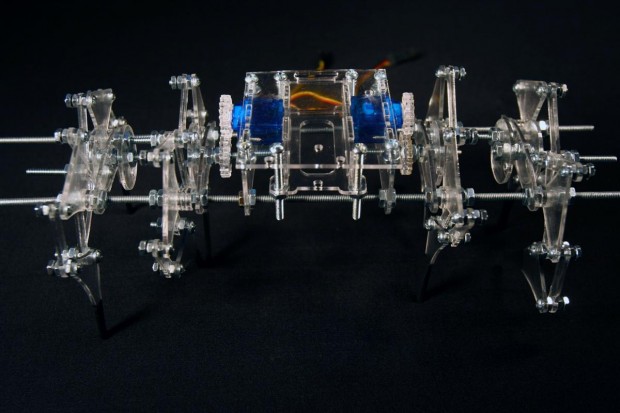
Laser-cut Jansen Arduino Walky Thing

Probably difficult to believe, but I do deliberately try not to be too robot-orientated.

This however I can’t resist because it combines so many of my favourite threads – Theo Jansen Machines, Arduinos, Rapid-Fabbing AND the designs etc are open-source, and up on Thingverse, inviting people to adapt/evolve.

(via)

Instructions / Materials / photos etc here

jansenwalker

The bits are for sale or you can make them yourself etc… this seems to be an emerging trend with open-source hardware. Varying levels of kitset completion, priced accordingly… so if you don’t want to solder, you buy a slightly more expensive, slightly more complete one. In this case the only choices are, 1) do it all yourself, 2) buy the parts and assemble yourself.

jansenwalker2

But is it useful for anything?

Indirectly maybe – we’re learning how to do open-source hardware.

What we need I think is some sort of template – some macro-format that allows a standardised way of presenting/storing designs/part-lists/instructions/photos/videos/change-logs etc etc. We can probably apply what we’ve learned from software – but hardware is different.

Threads : Musings on Crowd-Sourced Evolution

One of the things about blogs, is that as time goes by, the navigation needs change… that massive long list at the side is starting to get a bit unweildy so I need to categorise or tag etc.

Which has meant I’ve had to perform the exceedingly tedious task of tagging about 200 posts.

Out of this patterns have emerged… one of which is that I tend to get hung up on what look like “threads of innovation”. Bristlebots for example. Lego-rubik’s-cube solversRubik’s Cubes. Hexapods. Guerilla-Art Knitting. I’m not sure why I’ve fixated on these, but I have.

And the temptation of course is to try to make genealogies… family-trees of innovation, which is a kindof gene-centric way of interpreting what’s going on. It’s not what happens with Machine Generations. A new generation of a machine doesn’t have two genetic parents… it (potentially) has genotypes of the entire previous generations, and quite a few more besides. A major influence on my cardboard solar collector was (for example) Vinay’s Hexayurt things – rather than the thousands of “how to make a solar collector” instructables and videos currently available on the web.

A while back there was a load of fuss (which I thought was a bit childish TBH) because some book publisher put out a book about bristlebots without citing the original “inventors”. Hell, I’ve written a couple of things about bristlebots – and I didn’t know there WERE any original inventors. I’m guessing the publishers had the same inputs as I did – a huge mass of youtube videos, with no clear paths as to who inspired what… because really, each new generation may or may not have been inspired by any number of disparate sources.

Crowd-sourced Evolution is quite a bit more powerful than biological evolution. Machine Generations are not made up of randomly combining traits from a successful previous generation – the number of inputs can be much greater, and they’re specifically selected for rather than being randomly combined. A bit like an advanced sorting-algorithm… it homes in on the optimal solution far more quicky than the more basica algorthims.

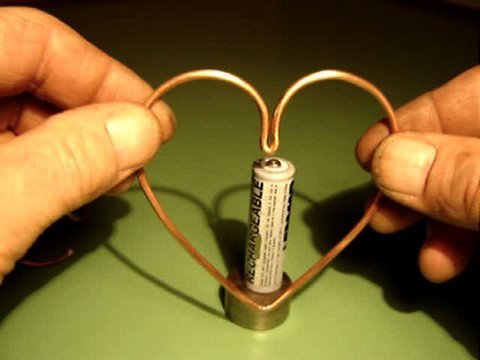
Homopolar Motors

I’m not sure that these are good for, but there’s a whole mass of them on Youtube etc.

The homopolar motor works from the Lorentz principle of current flowing through a wire makes a magnetic field which interacts with the neodymium magnet, producing torque. it says. On youtube. Who I no longer like, because they keep deleting things.

Ok, you’re scaring me now : #2

mara2

mara1

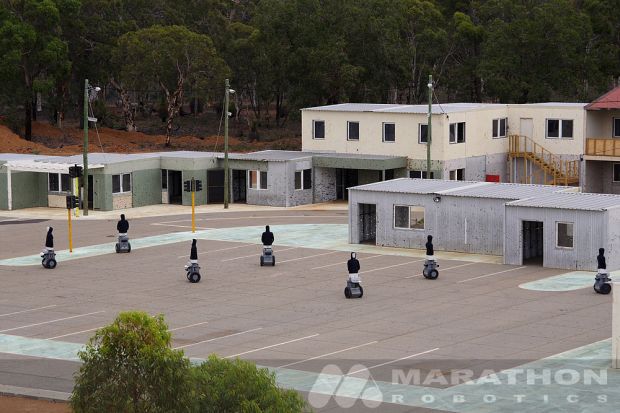
Scarier than a ghost in a machine is a machine without a ghost.

I don’t know what it is about artificial humanity that’s so creepy… it is though.

Anyway – this is one more thing down the Segway track [1][2]… There’s a couple of vids of them here at www.marathonrobotics.com from whence they spring. Reminds me of The Avengers off the telly for some reason.

Theo Jansen meets Segway (on a very dark night indeed)


from

This is a classic example of what I’m always going on about… about what I find interesting about the phase we’re going into.

Theo Jansen makes these

If you haven’t seen them before, check them out on youtube.

A segway is this…

Which is an invention that came out with a load of hype, and… well, sortof fell flat on its face really. It became an instant dorkmobile, although it would be a hell of a lot of fun, on carpet, when drunk.

Again, it’s one of those things that doesn’t really become interesting until the innovation side of things is thrown to the crowds.

Apropos of nothing, this also caught my eye

What could possibly go wrong?

Parallel Evolution. Orthogonal Evolution.

I heard this Ted talk recently where someone was (If I got this right) theorising about life on Mars (or at least Phobos or wherever) being recognisable in certain respects, because given certain environmental conditions certain patterns tend to recur… sharks, dolphins, jets etc… that sort of thing.

So being interested in memetics as well, I am kindof interested in Parallel Evolution… and get fixated on certain basic designs.

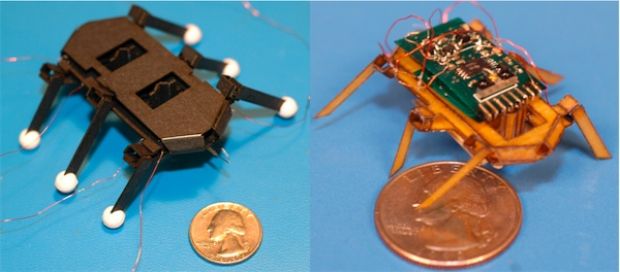
Is it me or are there are a lot of hexapods about? Someone’s really thrown some money at this one:


from botjunkie

Nasa apparently.

There are a couple more that I hadn’t seen before at this rather fabulous collection of photographs from The Big Picture.

wheels1

I’m not sure what bit of parallelism is being… parallelified here. Technically these things are insects – although they’re a bit more like crabs… but I’m not sure they’re either… or if the design IS actually springing out of an adaptation from any specific set of environmental conditions. I think maybe they look like crabs or tanks or people because… well, that’s just a cool thing for them to look like.

At the bottom of it all I have a feeling that the fundamental robotic muscle component is wrong. Servos are a little too slow and a little too noisy. They’re good for what they’re good for, but they’re never going to be able to compete with proper cockroaches. A real cockroach is an unbelievable piece of engineering. A real spider? Brrr…

Bristlebots Revisted

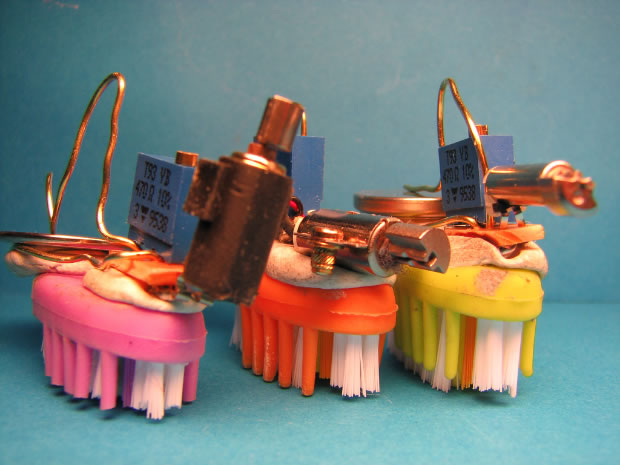
bristlebots
(from : Flickr : fdecomite)

I’ve noticed that when a new idea turns up, often it’s immediate use is as a toy… which I think is a useful creative path – “play” gives people a consequence-free medium in which to experiment with things. I went on about Bristlebots a while back, apropos of nothing… just thought they were a neat idea and that it was cool how the bristlebot meme propagated.

Now it appears they may have a useful application – in a theoretical sense at least… as a means for launching spaceships. I kid you not. There has long been talk about the use of a space-elevator for escaping earth’s gravity – basically a long cable that is held in place by the centrifugal force of the earth spinning. There was always a problem however with how to propel the car/ship.

It turns out that a guy from the EU Space Agency has demonstrated a possible method – using bristlebots… but instead of vibrating the bristlebot, you vibrate the thing it’s standing on – in this case the cable.

So there you go.

Open Source Product Design

In the future (and by that I mean 10-20 years) I think a lot of product design will be free and open sourced, and physical instantiations of these designs will be for sale… but basically anyone will be able to make their own if they want by taking them to their local print shop (which will have aquired 3d fab-lab units) and get the cut/made locally.

Rather than this being the creativity killer that copyright cartels claim it will be, it will lead to an explosion of creativity… a far greater number of people will be able to supplement their income by bridging various mechanical-aptidude gaps than are currently employed in the rarified ivory towers of corporate product design studios.

With that in mind, here’s a designer who makes open-source designs, and sells the products.

lamps

The payoff is of course that he gets talked about. I’m talking about him now. People who are involved in the creation of an object are far more likely to become evangelists for the product’s designer.

Next,

An ode to Cognitive Surplus.

A celebration of the inventive backwaters of the human spirit... a celebration of people who would appear to have far too much time on their hands...


A celebration of laterality.


If you come they will build it.


By knowledge shall the spheres be filled.


Weirdsky Industries