3D Printed Lego Blending
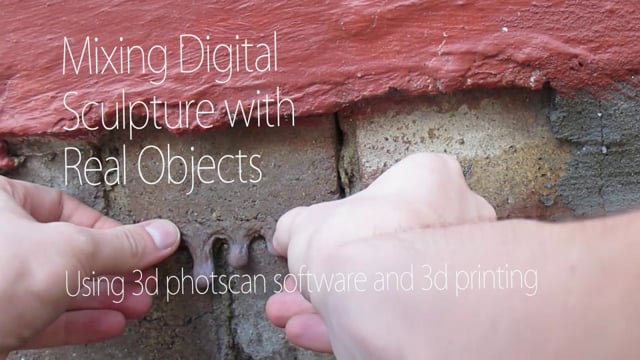
A sandstone block built from lego, blending real objects with 3d prints from Greg Petchkovsky on Vimeo.
Absolutely brilliant. Got to be useful for something.
A sandstone block built from lego, blending real objects with 3d prints from Greg Petchkovsky on Vimeo.
Absolutely brilliant. Got to be useful for something.
For the hardware revolution to really kick-off, we need to eliminate the DOS-Boxes.
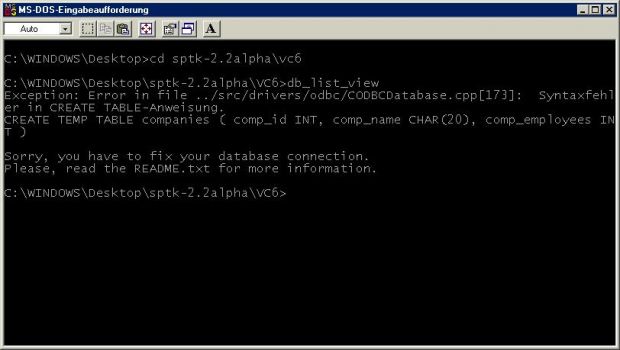
A DOS-Box is/was… the Command Line Interface that early PCs used to use. The whole interface was one big DOS box… the Windows turned up… and the DOS box was only called into play rarely… subsequent versions of Windows further marginaliased it. It looks like this:
![]()
The trouble with DOS-Boxes is they make people’s minds go blank.
That’s why Microsoft made so much money… they brought computing to the masses by eliminating the thing that scared people off.
Soldering is the DOS-Box of electronics.
If your project requires soldering, you’ve just lost 99% of the human race.
There are actually innumerable DOS-Boxes (to varying degrees) in any type of technology that has the potential to be democratised. If people had to make their own lego blocks (with the incredibly fine tolerances involved), it would never happen. Lego does all the heavy lifting… all the low-level programming… allowing people to operate at a higher level. WordPress (which this blog is written in) has about 8 layers of this sort of thing… PHP is a language written in another (harder to understand) language for example. WordPress is written in PHP.
Anyway – most modern CAD programs are far to complicated for normal human beings to use. Forget it man, it ain’t going to happen. For CAD/CNC/Rapid-Fabbing (and therefore the open-hardware revolution) to take off, then there needs to be a lot of legoification.
There are vague movements towards this starting to emerge. One is punter-tweakablability of pre-designed-designs. This is something that Ponoko are taking a keen interest in… an example of a tweakable lampshade below:
![]()
Although… um… I can’t actually get it to go. Might be a chrome-only thing.
There’s a variant of OpenSCAD called OpenJSCAD – which allows javascript programmers to set up simple versions of this sort of thing… I made the gun barrel below… as it’s JS, it would be trivial to have drop-down parameters etc, so people could change the dimensions. The trouble with this though is that it (so far) only works with Chrome… and the resolution is dictated by the fairly low limitations of the browser. Useable… almost… but not really good enough to output directly to a machine.
![]()
A more advanced/pretty version of this is Nervous System’s DIY Jewelery App.
So I think we’re going to see a lot more of this sort of thing… all made possible by the rapidly dropping price of digital fabrication. Whether we see a microsoft-style universal set of interefaces remains to be seen… hardware is a lot more complicated than software – and that’s why a lot of this revolution is to do with making hardware problems, software problems.
–
Another angle into this is legoification of electronics… a really good recent example is Tinkerforge… which is lowering all sorts of bars
Not least of which is the drift from languages like C++ and Java, to Python (and PHP?)… which are languages simple enough for the likes of me to understand. Still a code DOS-Box… but it gets rid of the soldering DOS-Box.
There is also a slightly lower-level version of this – for kids? I think – Littlebits…
And even further into ease-of-use land, there was a recent kickstarter thing that is basically a sensor block, that you “program” stimulus/response rules… which are about as complicated as email-filter rules. Twine.
![]()
I’m rapidly going off Kickstarter though – it’s turning into an outlet for established design shops to sell shiny jackdaw crap to fanboys. It’s not answering to needs, it’s answering to desires. Of wankers. That thing where those to dancing smoothies made a wallet out of two bits of metal with an elastic band around them, saying that your ability to choose different colours “made it an extension of who you are” made me throw up in my mouth… and they sold about $300,000 of them. Jackdaw fanboy crap of the type that swamped Carnaby St in the 80s. And don’t get me started on Quirky.com
Something that IS on Kickstarter though, and which is quite cool is the Open Beam project
![]()
Which not only radically brings down the cost of t-slot stuff, but which specifically makes it interfaceable with laser-cut acrylic, and circuit boards.
I’ve been saying this is the future now for yonks… smartphones as detachable heads for robots. Now one has turned up on kickstarter
For fucking $78!!! holy crap that’s cheap. I bought one. I bought one and I don’t even have a smartphone, on account of living in New Zealand, and there’s no one here to talk to apart from trees and clouds etc, and they don’t use smartphones. They whisper on the wind etc… nicholas… neeeeeckolaaaaasss… you seeee the neighbouooors toool shed? That’s gooooot to be a fiiiiire risk…
Still – that is amazing… a phone-to-world interface that’s got to be useful for backyard cruise missiles and whatnot. I can’t wait.
And here’s one where someone is controlling (and monitoring) their garage door with a pair of phones
Which I’m sure Marvin would be utterly dismayed by, but there you go. “Pair” is an operative word I think. The remote nature of these things does sort of assume a master/slave-device situation (for the moment).
–
Meantime – apropos of the previous scatter-brained post.
![]()
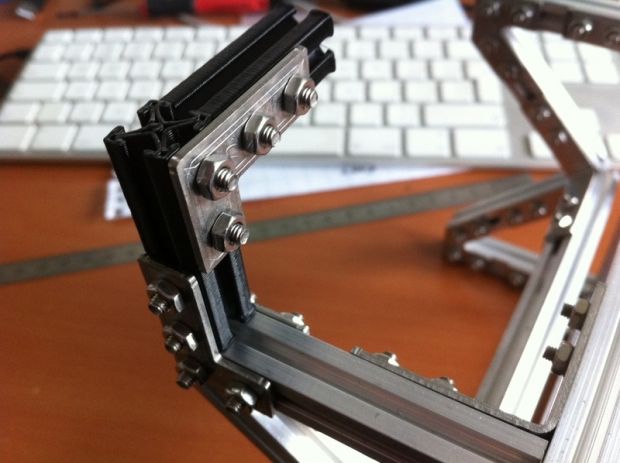
Glittering in the dark off The Tanhauser Belt. I’m guessing these don’t have quite the performance of their extruded aluminium fore-fathers, but will get you out of a tight-spot… and do illustrate the DIYification of Lego. T-Beams being a type of lego. So um… I guess what I was trying to say yesterday is that Lego (et al) are essentiall sets of codified hardware protocols. Types of “communication” between physical objects that allow them to click together. From these, big stuff can be built, eg:
2) Printed and extruded laser-cutter
![]()
Now I’m guessing that the non-vitamin parts for these are in the minority… but the point is
a) there are (now) powerful drivers to minimise vitamin parts. This is a direct result of open-source, and the antithesis of what old-economic-models are about… which is to maximise for scarcity. “Swappability” of parts is like reuseability of code. It gives an absolutely titanic advantage over proprietary models.
b) This stuff is not like a printer you get from HP – a lump of plastic and metal that sits on your desk and needs to be replaced every two years. It’s constructable, adaptable… and the parts are re-useable. It is (therefore) available to the same process of evolution that is a feature of repraps, but (probably) with a fraction of the time overheads involved with trialing-and-erroring new variants. It’s a matter of “playing with the blocks” rather than designing on CAD then printing out.
c) Legoification of non-vitamin parts radically reduces time spent writing manuals. Lego is an international language.
d) the brains of these critters are (eventually) going to be smartphones. They just are. There’s simply too much CPU power and “working already” sensory gear in them for them not to be… with the added advantage of absolutely massive economics of scale.
–
I actually bought one of the semi-vitamin parts from a kickstarter project recently – not for desktop CNC, but because it’s also useable as a video-camera dolly, at a tiny fraction of the cost of commercial variants.
See? Adaptability. Reusability.
Not sure about getting a twerp to introduce it… unless he actually built it himself, in which case I apologise, and cover myself in shame. He does that sort of patronising “explanatory gesture” with his hand that Robert Plant did in stairway to heaven, which is fairly annoying. I don’t know why, it just is.
Still… lego. Check this out:
Someone’s made their own lego-assembly-line, for sorting out coloured blocks. Bit rickety, but it works. I think the world needs (and is sooner or later going to get) a better lego for doing this sort of thing.
There are various attempts at it going on now… various plug-together electronic bits – littlebits being a notable recent example:
littleBits intro from ayah bdeir on Vimeo.
I’m pretty sure there are a bunch of extruded aluminum offerings as well… I happen to know this because I funded one of them on kickstarter. I’m not sure that these are “the future” though… well… not the whole future. Littlebits might be part of it.
I think what will happen is that the lego will be virtual. It’ll be a set of designs for standard components that (just) work together. All the tolerances, and hole-sizes and cog ratios and whatnot will have been already worked out… and you’ll be able to build something virtually, then either CNC it yourself, our buy the parts off the shelf – which might be cheaper because they’re made in China by the metric ton.
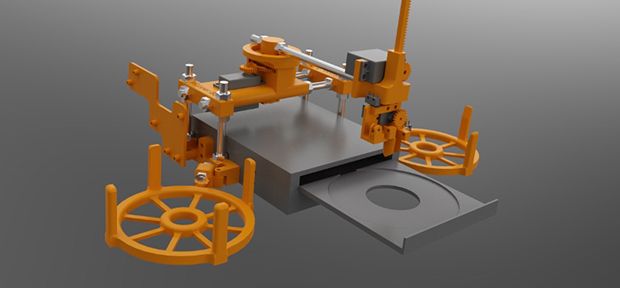
A couple of days back there was a flurry of articles about this cute little desktop CNC machine. It looked a bit like one of the space-ships off the ill-advised late-period star-wars franchise. Damned if I can find it now. What people say about “once it’s on the internet, it’s there forever” isn’t actually true. Stuff gets lost all the time. Try to find a tweet you made 2 years ago. See how you get on.
Still, never mind about that.
Building blockability is the thing… what needs to be built into this process is something (like software) where people don’t have to re-CAD wheels, so to speak. Something where they can print out complete gearboxes without having to make all the little bits etc.
This blog post kindof started badly, then went to pieces – basically because I spent about 3 hours trying to find that little CNC machine. Incredible. Maybe I was imagining the whole thing.
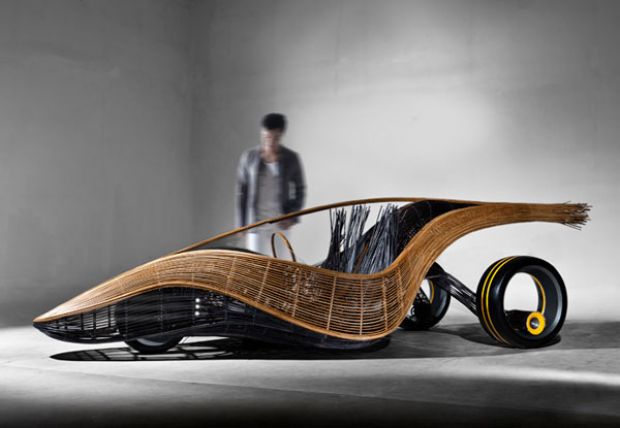
Whatever. Here’s a picture of a car made out of bamboo or something.
Which according to the blurb has actually been made – although that picture looks like cgi to me.
This one’s taken the loooooong way around
2000 year old Ancient Greek computer re-created in Lego
Elsewhere in the news, wikileaks.
![]()
(from)
The best thing about this is its feet. The only way it could be better is if it had shoe-laces.
(via make)
A convergence of my favourite solution looking for a problem, and the medium where sooner or later, everything worth reproducing, gets reproduced. Legoification is like a coming of age ritual.
Anyway here it is. I quite like this because it uses some sort of distance sensor rather than a giro… and if you can get a lego motor-sensor loop fast enough to keep an unbalanceable thing balanced, then you can probably use something similar on a reprap to get around having to to have ultra-high-tolerance engineering on every part. The machine can just sort of “feel its way”.
Or something. On that note, here’s another solution looking for a problem (another favourite of mine) a hexapod… doing what hexapods always do, which is pushups, then a spot of very slow walking… but this one’s different because it’s used genetic algorithms to teach itself to walk… and the good thing about that, is that you can use the same software on different hardware configurations.
And finally… I saw recently that the 2nd Life guy’s new thing is to create a… “a sentient artificial intelligence which only exists in a virtual world, capable of thinking and dreaming.”
LOL – no chance.
Ok – I’ll refine that… there’s no chance of telling the difference between the real thing and a simulacra…
… but a difference that makes no difference is not a difference* right?
–
* that’s a classical allusion – 10 points to any sci-fi fan who can tell me where it’s from.
(via)
I’ve been ranting on about this quietly to myself for so long not that to me (at least) it seems like common sense – smartphones are detachable heads.
So this thing uses the camera (eyes) of a nokia, and the brain to control a lego machine to do a 4-rowed Rubiks Cube. I bet Mr Rubik would never have predicted this when he invented the thing back in 74. It’s a nice example of a… fad? that’s never gone away. It seems to be progressively reinvented – and I guess that for several generations now, it’s been (always was) a talisman for “geek-cleverer-than-everyone-else-hood”… it’s morphed into a type of turing test.
So it seems that various people have decided that Lego Inc. isn’t fulfilling their Legolian needs, so they’ve started making their own designs.
There’s a litte video from Wired that goes on about the reasons for this… and about the rapid democratisation of manufacturing generally.
There is still quite a long way to go before this becomes a desktop process… or even a “local-key-cutting-shop” process… but talented individuals and small companies are no longer blocked from the game.
So Lego, that started out as a kid’s toy, has now evolved into something else… a platform within which evolution can take place, regardless of whether the originating company likes it. There was a wave of this several years ago – as described by Eric Von Hippel (4th video down).
He describes how when Lego released Mindkits, it was instantly taken up and massively extended by hackers and enthusiasts.. and Lego didn’t really know what to do, so they did nothing… and lo, a whole new area of quite fantastic innovation was born. Search for “lego machine” any time on youtube, and you’ll see a random sample of an incredible array of daftly innovative gadgets… that people are doing for fun. The level of innovation here is absolutely off the scale of anything that a private company could achieve.
(My favourite from today is a domino stacking machine)
Brilliant. And it’s been viewed about 700,000 times… gives TV advertising a fairly serious run for its money. And its free.
So anyway… according to the first video, Lego aren’t in the habit of making weapons, and have to care about things like copyright anality. Small players don’t. Small players can scamper between the dinosaurs legs, chittering to each other in their winter coats.
I think what’s interesting here though is that users/uber-fans have moved from “making things out of lego” to “making the actual lego itself”… doing a twostep around 20th century notions of “idea ownership”… which lego may or may not take exception to at some point, but they seem to be tolerating it for now… and really they ought to, because it all feeds back into the dominance of it as a platform for rapid-prototyping and generally messing about, being a kid.
But the uses can be more serious as well – there is for example, movement afoot to make an open-source printer (and ain’t that an industry that seriously deserves to get the shit kicked out of it) – and I noticed that in the conversation people were talking about rubber lego wheels possibly being ideal for making the paper roll forward.
One of my pet theories is that the killer-app of the hardware revolution will be software – and it will be something that’s a bit like lego – that allows people to design, then make things that they know will fit together because the connecting parts are standardised shapes. I’m starting to entertain nagging notions that this might not just be lego-like, it might actually BE lego.
Personally I would have thought mecano would be a better bet – more flexible and easier to make (the tolerances that go into lego… “stipples” is pretty insane)… but lego’s got this whole cute-fest thing going on, and it doesn’t present such a blank-slate as mecano. People are already doing it… there just isn’t the learning-curve-destroying-DIY software available yet.
So there you go. Don’t say you weren’t warned.
When I was a kid, Lego was all… little blocks. They were all oblong, and they were made out of wattle and daub. We used to have to make our own thatch out of straw etc and the lego people all looked a bit like Baldrick.
I looked a bit like Baldrick. I still do look a bit like Baldrick – and I miss the days when Lego was only blocks, because you could make absolutely anything out of it… because your imagination could smooth the curves, and television wasn’t invented yet so everything you did make, did actually come directly from your own imagination, with a little help from ergot, amanita and the hectic bit at the back of the bible.
So it worries me when I see modern Lego – which seems to be set up with lots of “shaped” bricks that basically allow you to only make one thing. I saw a great example of this recently… some massive space-ship that made me think… “Well, Yea, that’s pretty impressive, but… you could only make that space-ship… all the parts are too application-specific to make a house or a dragon or whatever”.
![]()
(from)
It’s absolutely huge.
![]()
And upon closer inspection, I was totally wrong – it isn’t one of those “set piece” ones like this,
![]()
It’s original… kindof… I mean it does come from photos from a film, bit it isn’t… um… a pre-designed thing a bit like a 3d jigsaw puzzle.
So then I thought… yea, ok… so it’s not exactly “made-to-measure”… but the design comes from a movie… so it’s not purely imaginative… it is still sort of “copied”… like people have internalised a load of lego-boxes etc…
… but then I lost the site for a couple of days, and when I was googling just now, found that there are literally thousands of Lego spaceships out there – whole galaxies of them.
![]()
![]()
And my own personal favourite, the prints of which are available on deviantart
Entire galaxies of them. Amazing – some are original, others are note-perfect copies… with every shade of originality in between… although there is this tendency to borrow heavily from movies – which borrow (I suppose) in turn from Sci-Fi authors and artists.
This is kindof an illustration (I think) of the way that human culture is a process of copying and morphing, copying and morphing. I think it’s impossible, and entirely undesirable to try to isolate the “copying” part of culture as something that “you’re not allowed to do”.
Attribution where attribution is due… that’s kindof a moral duty – but the idea that you can control the progeny of your creations is insane. Have you seen how much of it’s out there? It’s not so much a case of “there’s quite a lot of copying in the culture” as “the culture is almost entirely a construction of different shades of copying”… or ‘influence’, as it’s more euphemistically known.
That’s what it’s made out of. Copying is the lego of human culture. It’s how we get the bits to fit together. It provides the raw-materials for experimentation. To try to cut future generations out of the loop (because for a brief period in the 20th century, conditions existed where you could) is a bit dismal really.
Next,
A celebration of the inventive backwaters of the human spirit... a celebration of people who would appear to have far too much time on their hands...
A celebration of laterality.
If you come they will build it.
By knowledge shall the spheres be filled.