GENOMICONrss

rss

The Crowd-Sourcing of Intelligent-Design

open source hardware

Open-Source is the Agincourt-Inside

Ok, that came out wrong…

I meant… you know, like “Intel Inside”? And Agincourt was the classic disruptive-innovation upset (though there was a lot of bungling as well)… but basically it has become the… archetype? For when the aristocracy who’s power depends on a certain bastion/framework of incremental innovation… with the diminishing-returns that that entails (to compete you needed more and more and more expensive plate-armour)….

… meets a great unwashed who have turned up with something new, and which radically changes the economic balance.

The printing press did it big-time, and we’re well and truly into the Second Guttenberg shift right now, courtesy of back-to-back revolutions that are breaking with increasing frequency.

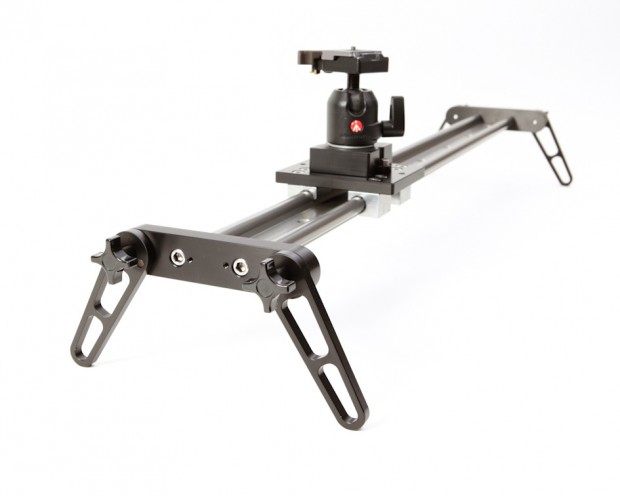
So anyway, I was looking at this earlier (on franken-cameras):

The way that Mark Levoy says “a single-lense, reflex camera that you buy from Canon or Nikon, is a closed, proprietary platform”… as though it is common-sense that his is a serious drawback, kindof made it dawn on me – that we’re going through a phase where every single locus of proprietary technological competition that exists, is open to an Agincourt scenario – and the key vector is open-sourcery.

Because (according to Eric Von Hippel, 3/4 of major product innovations are made by users and 85% of new product launches fail. Users are embedded in the problem. Manufacturers are embedded in the solution, so tend to make incremental adjustments to what already works.

Still… going back to the 15th Century,

Proprietary systems, copyright, patents etc etc… are all a kind of fortress… just as plate-armour was a kind of fortress… and as Nicolo Machiavelli said the last time around:

the best possible fortress is – not to be hated by the people, because, although you may hold the fortresses, yet they will not save you if the people hate you, for there will never be wanting foreigners to assist a people who have taken arms against you

Every fortress is an opportunity.

Mega-Micro-Fluidics

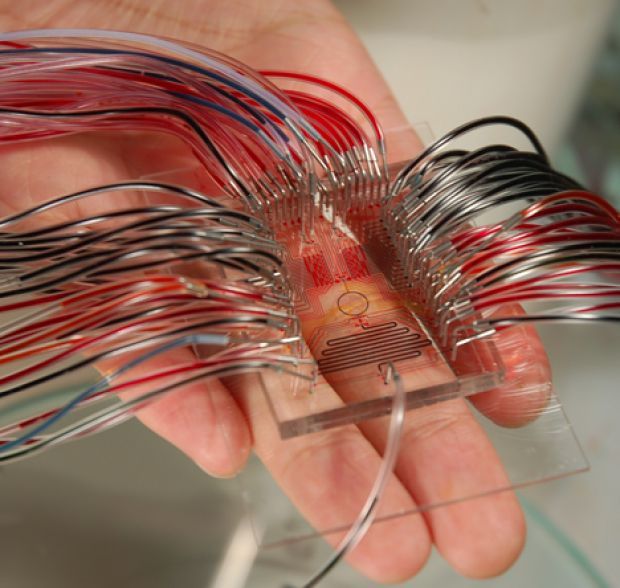
Worth it for the picture alone:

microfluidic

Which looks like some sort of beautiful deep-see worm from The Abyss, or a fascimile of one of those weird Chinese dogs that mad old ladies have made out of space-age medical equipment.

It is, a microfluidic chip capable of performing 1024 (or is that 1023?) experiments at the same time. Brilliant.

There’s been a lot of talk on the DIYbio list about Sharpie-Microfluidics (“Sharpie” being American for “pen”, or maybe “one of those felt-tipped pens with the pointy ends”, but to me it sounds Australian, and there’s nothing wrong with that. The Australians have a take on the English language that is disarmmingly direct, and I love it dearly

And I digress – apparently you can draw the microfluidic shape you want directly onto glass and it behaves just like a mega-bucks version.

Maybe there should be a word for the conversion of high-science to low (or at least, more democratically-dispensed) science. De-sublimation. It’s like turning gold into lead, but in a good way.

LittleBits : Electronic Lego

I think this is an amazingly good idea.

“littleBits is an opensource library of discrete electronic components pre-assembled in tiny circuit boards. Just as Legos allow you to create complex structures with very little engineering knowledge, littleBits are simple, intuitive, space-sensitive blocks that make prototyping with sophisticated electronics a matter of snapping small magnets together. With a growing number of available modules, littleBits aims to move electronics from late stages of the design process to its earliest ones, and from the hands of experts, to those of artists, makers and designers.”


(via)

I’ve spent ages wracking my brains trying to figure out how to plug components together without soldering or breadboards… Magnets! – and the polarity is set up so you can’t get the wires round the wrong way.

Beagle Boards

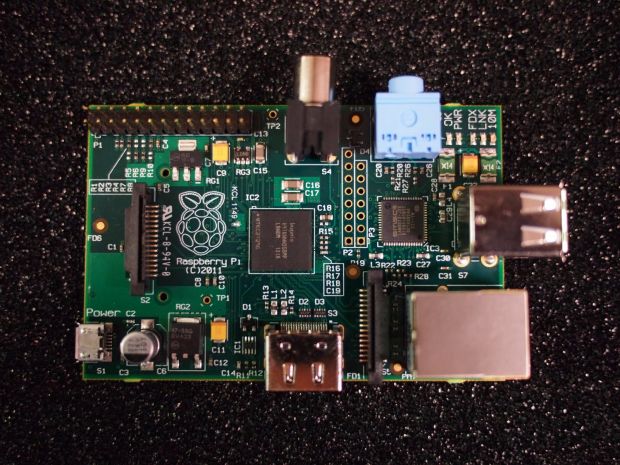
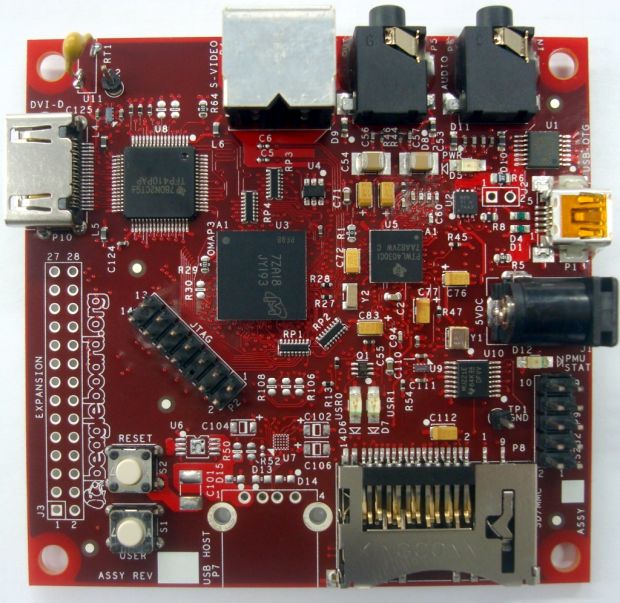
Beagle Boards are (in a funny sort of way) what I imagine all computers are going to wind up like (for a while at least) – a small, portable iphone like thing that you can plug keyboards and screens and whatnot into.

beagle1

I don’t think it will be Apple (or any of the other big players) that do it though. Real innovation seems to need to come out of left-field. The established players seem to evolve by tiny increments. Apple occasionally bucks this trend, but not as much as open-source is (or will)

So Beagle-Boards are an open-source computer… a step in the right direction I think – displaying (again) Amory Lovins‘ ideas about efficiency – ie: the economics of efficiency are irresistible because it allows you to completely dispense with whole subsystems. In the case of the Beagle Board, it doesn’t need fans etc.

Is it for wizards and rocket scientists and people with beards?

beagle2

Yes it is.

But remember folks, there are huge sums of money to be made by creating interfaces round the wizardry/rocket-science so normal human beings can join in.

(from Lady Ada)

Open-Source-Gardening Tech

This one is coming from opposite directions – and is probably indicative of a wider pattern.

From one end we have high-tech solving problems we don’t actually have, but which looks cool and will probably lead on to the solution of problems we do have…

And from the other hand we have open-sourced low-tech solving problems we DO have, the technologies for which have been around for decades, but have been made unavailable to the people that need them the most – because under the aegis of “The Market”, poor people don’t matter.

Maybe one day these two will meet in the middle. I think they will – In fact I think the killer apps of the 21st century will be exactly that – high-tech that has become cheap and ubiquitous, combined with open-source ethics, solving real problems – as opposed to eye-candy for geeks.

So. That said, this is pretty cool:

robotgarden2

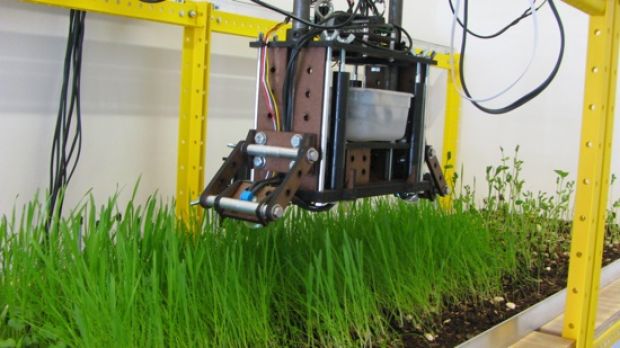
Kindof like a giant reprap that grows plants. This pattern of a 2-axis thing hovering over a 3 dimensional space that it lowers in and out of to “do stuff”. This one is cool because it has multiple tools – and multiple tools is a key part of the evolution of reprappery. In fact really, there should be a standard 3D platform like this with tool “plugins” that can be developed by other people – not necessarily wanting to build an entire system from scratch. A bit like WordPress or Firefox – or any other plugin platform.

There’s more at Lady Ada’s site – Lady Ada being a tower of strength in the open-source hardware world. Top blog as well. Her site has a lot more photos and links and whatnot.

I don’t know if this answers a specific need though – maybe if you want to buy out at the bottom and can’t be arsed gardening… but there’s a lot of people out there who like gardening. I live on a hill covered in old people, and they seem to like gardening a lot – what they need is a way to do it without having to bend over all the time, not some robot to make them redundant.

I get a feeling a better solution to the problem that robot gardeners are ostensibly fixing, is some sort of social reorganisation so that people who like doing this stuff are valued a little more than they currently are. Do we need robots or do we need jobs? Who are “we” anyway?

Coming from the other direction is a new plugin for the Open-Source Tractor Project that allows two people to plant 200 hazelnut bushes in an hour. A post-hole driller. Ever tried doing this by hand? Ever tried using a petrol-powered hand-held driller? This is a massive, massive back-saver.

from openfarmtech.org

A low-tech solution to an actual problem. This tractor costs around 5,000 – about 1/10th of the price of a new proprietary tractor – and it may look clunky, but it’s rock solid. It’s lean and mean design rather than feature-rich bloatware. Again It could well turn into a plugin platform – but then I think everything should be a plugin platform.

I mean, really I am a plugin platform… but nothing plugs in at the moment, so all these enhancements like clothes or laptops or cameras or phones or knives or chainsaws with flame-throwers attached are all separate entities – there’s no direct brain-to-device interface… but there will be, oh yes, there will be.

Home Energy Monitors / Automation

This is really starting to pick up steam now – Lady Ada has an open-source version

tweetstart_LRG

there’s a group in London that has regular meetings and a lovely logo

homecamp

the products are going mainstream
montor121

monitor2

google are getting in on the act, Tim O’Reilly is getting in on the act.

And so on – I’m still not sure they’re getting it entirely right – although Google and Amee aren’t getting it wrong – they’re just hardware independent, and this is a hardware problem.

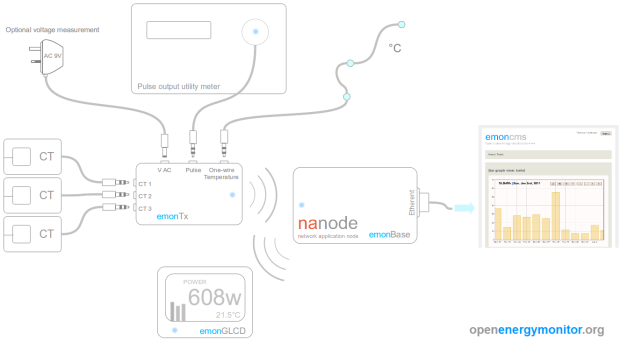
So what I think it needs is something that looks a bit like this:

centametr

Remote control is the bribe to get people to use this – it’s the killer app, and monitoring (which is where the real benefit lies) sneaks in on the back of it.

So:

- there needs to be wall plugs like killawatts, that monitor usage and can switch on/off remotely
- there needs to be clamp meters that can measure the whole house, or appliances where remote control is difficult or unnecessary
- The signal needs to be being logged all the time, without a computer – straight to a modem.
- the web software needs to be able to be hardware-agnostic.
- the visual feedback needs to operate at a really simple, emotive level
- it needs to be useful without having a meter on every socket
- it needs to be able to pull power from the lines its measuring – ie: no batteries
- and it needs to be cheap.
- the “devices” or “rooms” etc need to be taggable – this is where the social benefits kick in – so we can see if a certain product group (or even product) is being a drain on resources.

It’s nearly there, but it’s not quite there.

This one is interesting (TED) because it uses the power lines themselves to transmit data – rather than resorting to XBEEs

Open-Sourced 3D Printer Consumables

This is what we like.

“A University of Washington engineering professor has come up with a new goop for his 3D printer that costs 1/30 – 1/50 of the authorized goop, using a mix of clay, sugar and nutritional supplements, then open sourced their formula. Basically, these guys are the inkjet cartridge refillers of the 3D era

I went on about this before
, but got distracted by the historical angle so missed the price/open-source angle.

Something that we seriously need to avoid is a situation where (as is the case with 2D printers), the printer is basically just a conduit for selling chronically over-priced and proprietary consumables.

This particular development, as well as knocking the bottom of of proprietary pricing and being open-sourced, has the added advantage that being made out of sugar and maltose, you can eat your mistakes… though there is a bit of ceramic in there as well, so nutritionally it’s the same as also eating the plates.

Crossing the Brain-Machine Barrier

Quite a cool thing here from Korea that allows you to communicate with your PC using biofeedback… reads electrical impulses from your fingertips so you can train yourself to go into meditative (for example) states.

eeg1

eeg2

I know what you’re thinking: “cool, I wonder if I can stick my cock in it”.

What’s the matter with you people!?!!? Is that all you think about? Teledildonics??? Why can’t you think about mowing the lawns or simple home-DIY projects etc like normal human beings? I really do find the lot of you truly alarming.

Anyway, moving on etc… this reminds me of the Open EEG movement which is fairly cool I think. They have an animated introduction, that I haven’t yet seen… and links and instructions etc to all the various bits and pieces you might need if you wanted to make a mind-controlled aeroplane, which would be cool as well.

We want the moon, and we want it now

Open Source Space Travel.

Throwable spybots

Well it only seemed like yesterday that ludicrously macho clips like this…

where a society that is eating itself alive, throws up as entertainment, incredibly expensive, theatrical and draconian ways to attack and imprison its own population… were ranting on about spybots.

Seriously though, is that what an up-to-the-minute, fashion-conscious policemen is wearing these days?

Welcome to the future. It’s all a game – like paintball but with real bullets.

… still, not to worry kiddy winkies, because you can now get a toy version and at least therein, some semblence of net-value is being created.

cameraball
via : gizmag (and goddamit, in the time it took to finish the sentence, Sony Ericsson have put out a prettier one
cameraball2

and of course any proper geek… you know, they type who watch robot wars, will instantly recognise that they’re kindof based on one of these:

)

And if we get bored with that (we won’t, but if we do) then we need to radically redesign our entire economic system. This one isn’t working.

I mean these guys (who’s thing is to set up high-tech self sustaining and self-contained villages, and who have created an open-source tractor, which may look like a bit of a clunkster

tractor

but which can do everything that one 10 times (like $50,000) the price does, and it’s utterly indestructable… and they actually cast their own steel to make it, which is incredibly impressive)…

… these guys, are working on the assumption that a person should need to do around 2 hours of work a day to sustain themselves.

And that people, really will create a cognitive surplus.

Next,

An ode to Cognitive Surplus.

A celebration of the inventive backwaters of the human spirit... a celebration of people who would appear to have far too much time on their hands...


A celebration of laterality.


If you come they will build it.


By knowledge shall the spheres be filled.


Weirdsky Industries