Ok… so a couple of weeks in, I have a perfectly working laser-cutter.
The controller of which (only) runs a piece of software called LaserCutter 5.3, which is one of most inadequate piles of shite I have ever seen. It only runs on Windows XP. It looks like it was written 20 years ago. It’s also cripple-ware, which means it’s been deliberately crippled to only run with a USB dongle
(this usb-stick could kill your business)
… aaaaaannnnnddd … the dongle has stopped working… which takes the entire machine out of commission until a replacement can be sent from China… only they won’t send one until the broken one has been sent back. Several weeks, minimum.
And for what? A fucking dongle?
If you’re thinking of buying a laser cutter DON’T buy one that uses a MPC6515 controller – which uses the DRM crippled LaserCut 5.3.
…
So… it’s looking like I might be looking at an open-source variant sooner than expected.
Here’s a stop-motion vid of open-source Lasersaur being put together. Far nicer looking machine than the commercial ones, and user-innovations (can) get fed back into the next iteration. I’m not sure that it does rastar-engraving mind… and that’s kindof crucial.
(NB: This sort of collaborate approach to putting-stuff-together may be great for learning, but it’s not generally how creativity happens. If you want to do any actual thinking, you’re probably better off doing it on your own. Collaboration is massively over-rated, in my most humble of opinions. Extroverts love it)
Which seems like a nice idea, except that it’s basically a sharpened cattle-prod, and cattle-prods are mainly used for “crowd control” or torturing people.
I don’t know why I like weapons so much. I hate what they’re used for.
1) I was raised on a farm. My parents were matter-of-fact about sex, how it worked, what it was for etc. People who feel they need to “protect”their children by lying to them about sex, need to go live on a farm FFS.
2)Internet Porn is damaging… and it appears to be more damaging to children than adults. I’m not talking about the participants (where it may or may not be), I’m talking about the users… where signs are, it can be.
I’m not talking about morality, I’m talking about dopamine-trigger addiction.
3) “Porn” is impossible to define. At one end there are people literally being tortured and killed. At the other, there are entire genres that are indistinguishable from family photographs, and the only thing that makes it porn is the context. So who decides what is/isn’t porn? A bunch of old people? We’ve tried that, and they always censor art first.
And in between is every gradient of “lifestyle choice” you can imagine. Google “wool fetish” and look at the pictures. Is that porn? Who gets to decide?
Iceland’s pro-censorship politicians seem to think that porn is all violent… which isn’t true… I’m willing to bet that other forms of entertainment (games, movies, books) have a bigger % of violence than porn. It’s the sex they’re getting hung up about, not violence… and while there may be some merit in looking closer at the how porn affects people’s brains, pretending it’s about violence is dishonest.
4) Anyone advocating “censoring adults to protect children” needs to be sacked on the spot.
5) Any government deciding that it needs to take on parental duties on behalf of the general public, needs to be sacked on the spot.
6) Any government attempting to legislate morality needs to be sacked on the spot.
7) You cannot censor the internet without owning the root… and therefore functionally breaking it, and creating the digital apparatus for police-statehood.
In a nutshell, no matter how bad internet porn might be, it will never be as bad as governments using it as an excuse to try to control the internet.
…
So… I think there needs to be much clearer understanding, and more research into the neurochemical effects of porn… and for this to be widely and honestly communicated to the public. A bit like the opposite of what was done with the failed war on drugs. We need honesty.
We need to treat all drugs as a health issue rather than a criminal issue… and I’m rapidly coming round to the idea that internet porn could well shape up to be a drug-like health issue as well.
Think you’re not addicted? Try giving it up for a month.
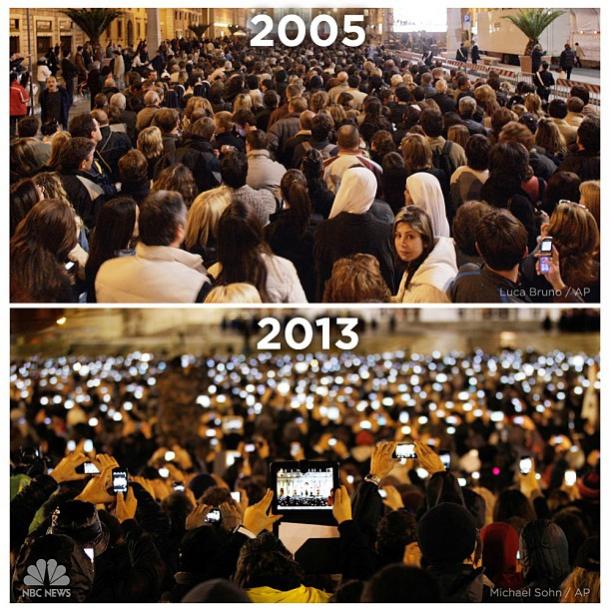
Google Glass
Nothing so unstoppable as an idea who’s time has come?
I wouldn’t be at all surprised if google bungled this one. They’ve bungled a lot of their bright ideas in the past. Right now the glasses are chunky, and likely to provoke Segway Syndrome… as in “Look at me everybody, I’m a dork”… but this will change. There are already contact-lens variants in the pipeline.
If they don’t bungle it though… or if someone comes along and does the same thing, only better, then it’s potentially a really big change. What it is, is… powerful sensory augmentation. It literally creates photographic memory in it’s users… and potentially, the ability to see at resolutions or lighting conditions that are beyond normal human capacity, and to focus on things in peripheral vision. I think the augmented-reality aspects of it will be secondary to this… though they might make us even more “Always On” than we already are, and that’s already pretty toxic.
There are a couple of ramifications to this:
1) fuck google “owning” (or even storing) people’s visual memories. I’m not using these things if that is the requirement… and it’s likely to be something they try to foist on us. Unless our data is completely private, and out-of-bounds for ANY authority, then we’re all turning into little CCTV cameras.
I read recently that the reason the reason for the proliferation of dashcams (in Russia and elsewhere) is as a check against police corruption. This potentially gives everyone an always-on dashcam. It has serious ramifications for corruption.
I think that’s potentially one of the biggest ways this technology will be disruptive. It upsets power-gradients. It upsets authority.
3) It’s going to be used for porn.
It just is. Letching at girls/boys is going to become (for a while) a money-spinner for some people, and a hobby for a lot of others… and who can honestly say they won’t rewind to take another look at that girl/boy they saw this morning? Everybody will do it – it’ll become the ultimate tool for unrequited love, and like porn, it will be impossible to delineate between what is sexually-voyeuristic, and what is not.
For a lot of people, this will be The Reason, they buy this technology.
4) We’re going to need new etiquette surrounding privacy. New forms of politeness.
I’m pretty sure that if someone finds out that someone is wearing these things, they’ll stop talking to them. That’s kindof what happens now if you shove a camera in someone’s face. People freeze up. It’s not entirely impossible that these things will fail because their users become ostracised. This technology could fail because people simply don’t like being around people using it… their friends at least. Authority will love it… until they find that it’s being used back at them, then they’ll flip out.
5) Bars, brothels, courtrooms, cinemas etc etc will try to ban them, but if they’re the size of contact-lenses, they won’t be able to for long. Corporations and government institutions will simultaneously love and hate them – as I say, they upset power gradients.
6) “IP”?
LOL.
…
And so on.
Mainly though, I can see a major collision between google glass, and hysteria about child-porn… which people are already pretty hysterical about. American teenagers are finding themselves on sex-offender registers because they have naked photos of themselves. In the UK, it is illegal to look at sexually violent pencil/pen drawings. Different jurisdictions throughout the world have different ideas about what is/isn’t “allowable”… but the internet has pretty much rendered all of that moot. Then there’s child-porn, which is being used as a political tool, and the public horror/fascination with which is cynically used to sell advertising in tabloid newspapers and television. It’s the witchcraft of today. Simply to be accused is to be found guilty… which isn’t to say the damage isn’t real, but the reaction has been hysterical, and (like “IP”) is being used as a trojan-horse for state surveillance and censorship.
With Google Glass, regardless of intent, people are suddenly going to find themselves with images of other people’s kids… and the only thing that’s going to separate that from the more voyeuristic genres of child-porn is the context. If you walk down a street wearing Google Glass Goggles, it’s going to happen, and there ain’t a whole lot anyone, including you, can do about it. You can’t stop other people doing it; you can’t stop your glasses doing it yourself.
It’s something we’re going to need to get our heads around… fairly soon. And I would suggest growing the fuck up. Taking photographs is not the same as capturing people’s souls… I will concede it’s tricky though. On the 6pm News here in NZ tonight was a “story” about someone using a micro pen-camera to take photos up schoolgirls skirts… and yea, that should be illegal… but where do you draw the line? to say that privacy (or whatever) has been breached? Before the act of taking a photo can be said to have “a victim”?
–
Here’s a point of principle: It should never be illegal to look at pictures. If the pictures are of something illegal… then they’re evidence. The crime they’re portraying should be illegal; looking at the evidence should not be.
I’d draw a line a paying for photos of a crime though… if in so-doing, you’re creating a market for the crime… in a sense, paying for the crime to take place. But just looking? No… that’s just a whisker away from having “Illegal Ideas”. It’s not up to the state to tell us what we can/can’t think; what we can/can’t say; what we can/can’t see.
It’s only a matter of time though… before there’s a news story that goes “The killer was found to have thousands of images of the victim that he’d collected using google glass”.
Watch this space.
(ps:
“Pictures Escaping From Behind Glass” is a reference to the way computer interface has developed… Google Glass combined with Leap Motion and Occulous Rift could completely revolutionise interface… but “voice commands” probably aren’t going to happen. That’s just silly.
)
It’s quite an unusual tool this, in that among the first things you use it for, are to create parts to fix/improve it. It’s self-reprapping.
1) The air extractor was shite. It wasn’t put together properly (a bearing was grinding) and the design simply doesn’t work very well. There’s a manifold that pulls air into a vacuum-cleaner tube.
The vacuum cleaner tube was the only thing the laser-people failed to supply… and it wound up costing $120… because the first tube I got was corrugated so made a noise like a high-pitched trumpet. The 2nd (pictured) was quieter, but that manifold design deletes about 90% of the suction.
So I made this:
Basically recreating one of the removable walls of the machine, and creating a bigger manifold. The silver tube cost $12. It’s now simpler, and extracts air like a backwards hurricane.
The laser-cutter built replacements for these for itself.
(when you’re rebuilding something from reality, photo it, then use Inkscape to trace the bitmap… or just trace it by hand)
2) The focusing element consists of 2 concentric tubes, with a locking nut. Unfortunately the inner tube was so short that if you try to focus on anything shallower than 4mm (which is most of what you want to cut), the nut doesn’t connect and the lens falls onto the workspace.
What dumb fuck designed that? Jesus.
Anyway, had to cut shapes to raise the bed. Now works fine.
Word to the wise: When you’re photographing your honeycomb… be sure to mark which way up/way round it was in the machine… because these things are built by cowboys, and none of the holes will line up if you forget which way up it was.
–
Which brings me to the software that is used to run it. “LaserCut 5.3″. Without a doubt, the worst software I have ever seen. It’s shockingly inadequate, proprietary crap… anyone who makes software that only runs with a dongle, deserves a good, solid punch in the face. Seriously.
And being proprietary (ie: Of The Monopolist Cuntscape), I’m “not allowed” to fix what needs fixing.
It only runs on Windows (which sucks) and only on versions of windows so old, they’re not actually sold any more (which is triple-word-score suckage)… so not only do you need a dongle, you need a whole new (old) machine to go with the dongle. Not such a huge deal for me, because I prefer to have a dedicated computer permanently attached (with a dropbox drive, so I can work on a proper linux laptop), and I have old computers lying around anyway.
But it’s shockingly bad… looks like it was written in the early 1990s. Any open-source alternative that turns up that can do the same thing is going to completely delete their business, and they fucking deserve it.
I think this should ideally start as an Inkscape plugin… simply to do the laser-configuration, and generate the (proprietary (barf)) output… or maybe we should just go with fresh hardware that supports Gcode (if I’ve got that right).
So… the next machine I get will be open-source hardware. Probably lasersaur… the thing about the open-source approach, is that all the myriad design improvements that get made, get fed back into the main body of work… so each release contains improvements made by people actually using the thing… which is not happening with these Chinese machines… who’s design is akin to Geocities websites from the 1990s.
Open-source is a fairly radical/radicalising process. With software it’s kindof taken for granted, but with hardware, you can really see how shite things really are without it.
…
Not that this is a bad machine… it’s just that all the improvements I (or anyone else) makes, don’t make it into the next iteration, and it uses Slumlord-Software… ie: a tatty shithole that is nevertheless very expensive, because its owner has a monopoly.
“Intellectual Property” is a state-inflicted monopoly that suffocates innovation. We need to abolish it all.
Ok… some time passes, time to recalibrate and regroup re: impressions.
The new laser-cutter is now making $. Using it to make linings for caliper boxes:
And I’ve made these little things to help with calibration
And 1/2 did a new business card…
…but there’s more to this stuff than meets the eye – it’s doing this annoying thing where every new cut starts with a massive spike, that leave a hole. When you work with steel, you need to make a “track-in”… but I really don’t want to have to do that with acrylic. If Ponoko don’t need to do it, then neither should I. Off to the laser-cutter forums go I then.
…
Still… the most major second impression I get from this bit of kit… is the (waiting) power of it… the power to make something… then click a button and make it again. And again. And send that file to someone else and they can make it. Not the right size? Scale it. Press button. Done. Different material? No problem… click a button, done.
I know this is kindof pointing out the obvious – but this is the first time I’ve really felt it… when digital fabrication hits the mainstream it’s going to be a tsunami. Entire industries are going to be knocked out of the way… and new industries created I guess. The copy-monopoly people are going to be utterly incontinent – but like, fuck them. The technologies for oppression that these people are co-creating are such that not only do they not deserve to be in business, they don’t deserve to live.
But… still… there it is… waiting in the wings…
… Download a design… click a button. Done. Want another one? Click a button… done. Want to sell it? Fine… go for it, but you’re competing with people who also have these machines… and what do they do? Click a button. Done.
In what passes for my new laser-cutting studio, which has the grooviest 1970s carpet in the world.
Back of laser-cutter… big tube, held in place with combination of rubber bands* and gravity.
The laser-beam bounces around 3 different mirrors before hitting the lens… and these mirrors are on moving gantries, so have to be calibrated so the beam hits the middle of each mirror, dead-centre… no matter where on the table the laser-cutting head is.
I’ve watched people doing this – if you’re trialing-and-erroring it, it takes hours… days…
Unless you make one of these:
Which is a low-powered red-dot laser, centered in a couple of bits of wood, and put inside a tube the same diameter as the laser tube. It’s basically a simulated laser-tube.
You then remove the real tube, and put this one in its place. This way you can adjust the mirrors, and see where the beam goes in real-time… rather than guessing which mirror to shift based on an invisible milli-second burst of light so powerful it sets fire to everything it touches.
So you get the mirrors set up with the low-powered DIY simulation tube… swap in the high-powered tube… fine-tune… done.
Took less than 5 minutes.
…
* RUBBER BANDS ??!??!!
You’re holding the laser-tube in place with RUBBER FUCKING BANDS????
This laser-cutter is in much better nick than the last one I bought, but rubber-bands represents a new level of daring in the corner-cutting stakes. There are pros and cons:
Cons: ARE YOU FUCKING KIDDING ME? RUBBER BANDS???
Pros: If I need to replace them, I have more in the kitchen.
In a funny sort of way, they’re not a bad idea.
…
Quite an easy machine to set up all in all. Had to learn to read Chinese obviously, but that’s not a biggie. It’s a bit like cobol
There are a couple of things interesting about this – one is that wind energy is creating a surplus. The other is that it’s not entirely impossible that it’d be able to generate energy all on its own, even on still days, using tidal power. If it wasn’t 15 metres high that is. That’s high. Even for me.
I wonder how small these things could be… which is to say, I wonder if they could be household size. It’s a similar principle to the recently quite famous, but “I’ll believe it when I see it”, gravity lamp.
Which did massively well on Indiegogo – but I’m always a bit suspicious of well-meaning Westerners “solving problems” for people they feel sorry for. These don’t really have a good track-record… and there’s this tendency for the audience not being people in the third world, but other well-meaning people in the 1st. TED talks. All that sort of thing.
It’s a simple technology though… moving magnets, rather than nefarious chemicals… and I’ve got a bit of a soft-spot for simple technologies… especially those that have a manual fall-back.
It’s hard to recall exactly when it started, but ALL THE BULLSHIT IN THE WORLD seems to be justified by the notion that corporations should do everything because when they compete, the prices are better.
I think it started with Reagan – or at least it came out of the closet under Reagan… but Thatcher did the same, and here in New Zealand a Labour govt was hell-bent on selling assets owned by everyone, so people who were rich, could the rent them out to people who were poor. This ideology was used to rape and torture South America (under the aegis of the IMF, who now admit they were wrong)… and the same austerity and insanity is being inflicted on the EU, resulting in the highly predictable return of Nazism.
Corporations do not compete on price, they compete on profit. This may be achieved by driving prices down, or by innovation… but is just as likely to be achieved by lowering the value of their output, or by shifting their business into areas where they can extort monopoly rents. Or crime.
Enter Open Source.
Something I’ve noticed is that open-source is driving prices down far faster and steeper than corporations ever did. That little helicopter (which is smartphone controllable, and has streaming video) is mooted to be sellable for $49. I’m mildly suspicious of the company that’s selling it – because they’re not selling it… and won’t, because although they claim to be open-source, they’re only interested in licensing the their “products”… which as far as I can tell ain’t that open…
… and then there’s the Leap interface. Also not open, although it is created to be a development platform… but $70? If that was being sold as a consumer item it would be triple that at least. Again it’s something that isn’t actually available yet – which is another pattern I guess. Maybe that’s a factor – using really low price as a marketing driver – and if you’re doing it with pre-sales you’re not in the risk-aggregation business.
So item 1 and 2 – dubious openness, but far far cheaper than expected – but then there’s the Kickstarter effect on 3D printing… the price has nose-dived far faster than equivalent corporation-built machines. I think video camera accessories are seeing a similar pressure, from a similar direction. The Video DSLR blogs constantly go on about “affordable” products… by which they mean $700. Open, mail-order based variants are knocking the legs out from under them.
I think there’s a bunch of things going on here. Namely:
1) Mail-Order
Selling mail-order only, automatically halves the price. If you’re intending to wholesale, you need to double your online-price, because bricks and mortar retailers generally want to put a 100% markup on top.
2) Micro-business
Tiny businesses, often run out of residential premises do not have the red-tape and expense that businesses with employees, commercial premises, loan repayments, insurance etc etc. Upstream efficiencies multiply downstream savings.
3) Transparency
If everyone can see what your materials and labour costs are, you can’t quite so easily “just make up a price that the market will stand”… because people will just make their own.
4) Not in the risk aggregation business
Big corporations do not make products that solve problems that they themselves have. Their model is based on sinking A FUCK OF A LOT of money into development, market-research, marketing etc etc… the costs of which are all up front, with the risk the product might not sell.
Because of this, the products that do, are covering the costs of those that don’t – so need to be milked for all they’re worth. This creates a bias towards incremental innovation…
risk aggregation businesses have a bias towards incremental innovation
… open-source on the other hand has a bias towards disruptive innovation. Open source is all about changing the rules of the game, or of not playing to rules at all.
This is why big corporations so desperately need copy-monopoly laws… and why open source does not give a flying shite about them.
5) Crowd-funding to achieve economies of scale
Still can’t do economy of scale like major corporations… but pitching it to the web as a pre-sale is leveling the playing-field, and relieving innovators of the pressures that career-lenders tend to impose.
6) China
Or more accurately, Ali-Express, which radically lowers the costs of (some) components. Similarly Ebay – although what’s cheap on Ebay and what’s available on Ali-Express is often coming from the same people.
7) Rapid-fabrication techs
… primarily laser-cutting, followed by 3D printing and CNC milling. These lower the cost of prototyping, and more often than not, allow you to create parts for production without having to lay out $$$ for injection molding etc etc.
And again – upstream efficiencies multiply downstream savings.
…
So… in a nutshell… all roads are not leading to, but are leading away from, risk aggregation. That’s the key factor I think.